The EU’s door to the east is once again ajar, but the partner that spent two decades holding it wide open for newcomers is no longer inside.
Taras Kachka, Ukraine’s deputy prime minister for European integration, called it “a real Rubicon”. On the evening of June 15, in a conference room in Luxembourg, he and his Moldovan counterpart opened the first cluster of chapters in their countries’ accession talks, the slow machinery that one day might end in membership. Hungary’s new prime minister, Péter Magyar, had lifted the veto that Viktor Orbán held for more than two years, after striking a deal with Kyiv over the rights of ethnic Hungarians in Transcarpathia. A week later Britain marked ten years since it voted to leave. Britain was therefore not involved in the decision to open negotiations with Ukraine or Moldova, but, were it still an EU member, would no doubt have approved.
In a 2017 paper, James Ker-Lindsay of the London School of Economics traced Britain’s path on enlargement from “ardent champion” to post-Brexit bystander. The enthusiasm was neither sentimental nor altruistic. London pushed for a bigger Europe in good part because a club of many members would be harder to weld into the federal union that Eurosceptics feared. Widen the EU, the thinking went, and you slow the deepening. Tony Blair acted on it. When eight countries once behind the Iron Curtain joined in 2004, Britain was one of only three governments, with Ireland and Sweden, to open its labour market to them immediately. The newcomers found their loudest advocate already inside.
Last December Charles Grant, who runs the Centre for European Reform, gave the absence a name: the “paradox of French power”. With Britain gone, he argued, the Commission under Ursula von der Leyen has slid towards the industrial interventionism that Paris always favoured. Four laws passed since 2019 carry the mark, among them the Net Zero Industry Act and the Critical Raw Materials Act, each fixing production targets and trimming the free-market reflexes the British used to defend.
The budget hawks miss Britain too. As one of the bloc’s biggest net contributors, it spent decades pushing back against a fatter Brussels purse and the farm subsidies that swallow much of it. The rebate Margaret Thatcher famously (or, infamously, depending on your point of view) got from the EU in 1984 was the standard bearer of the UK’s obstinance. Its exit left a hole of roughly 10 billion euros a year and passed the frugal banner to the Netherlands and the Nordics, none of them able to swing the mood of a room the way London once could.
Britain’s empty chair
In September 2024 Mario Draghi handed von der Leyen a report urging common borrowing, an end to many national vetoes, and a genuine single market for capital. Britain had heard the tune before. In December 2011 David Cameron walked out of a Brussels summit rather than sign a treaty writing budget discipline into EU law, the only leader of 27 to wield the veto; the other 26 pressed on without him and signed the following March. John Major had kept Britain out of the euro at Maastricht in 1992 on the same instinct. Draghi’s report met no such resistance: von der Leyen said every member state had endorsed it, and in 2026 he took the Charlemagne Prize.
In February, in the Frankfurter Allgemeine Zeitung, Albania’s Edi Rama and Serbia’s Aleksandar Vučić asked to be let into the single market and the Schengen zone first, and to take full voting rights, and the veto, later. Britain would have known the request: market access ahead of political union had been its own prescription for years. Marta Kos, the enlargement commissioner, swatted it aside within weeks, doubting the two men grasped “how much you have to deliver”, and several capitals now want any newcomer to wait years for full voting rights even after it joins. Rama has not cooled for all that. At a summit in Tivat on June 5 he called his country a fanatic of the European faith, with “no plan B”.
Britain has not gone quiet in the neighbourhood. In July 2024 Keir Starmer (who resigned as UK prime minister yesterday; his successor will be the seventh UK PM since the referendum) hosted some 45 leaders at Blenheim Palace for the European Political Community, the loose forum Emmanuel Macron conjured up in 2022; it settles nothing, which is rather the point. Britain was the first country to send Ukraine tanks and cruise missiles, and in January 2025 Starmer signed a hundred-year partnership with Volodymyr Zelensky in Kyiv. For Kyiv that makes Britain an armourer and a friend. It does not make it a vote in the room where EU membership is settled.
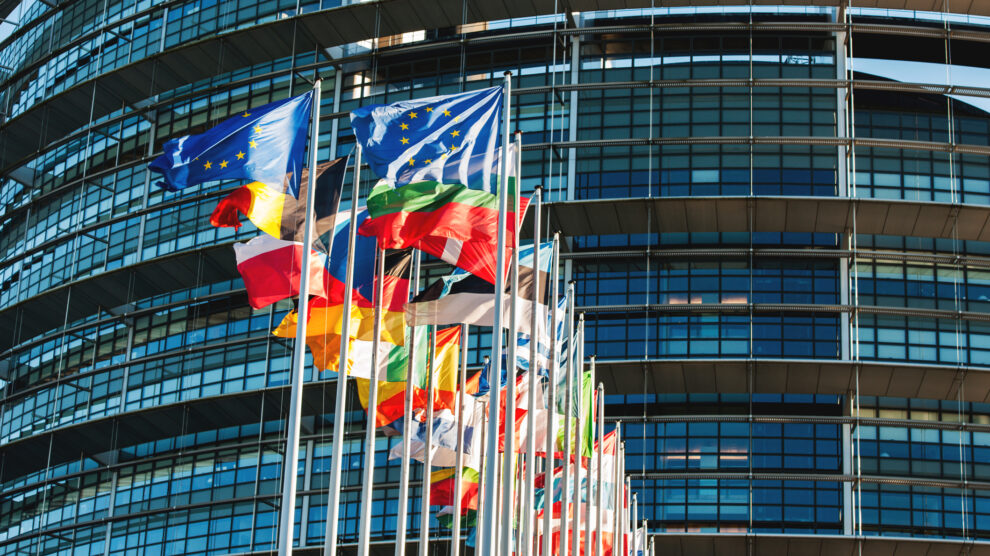
Photo: Dreamstime.