
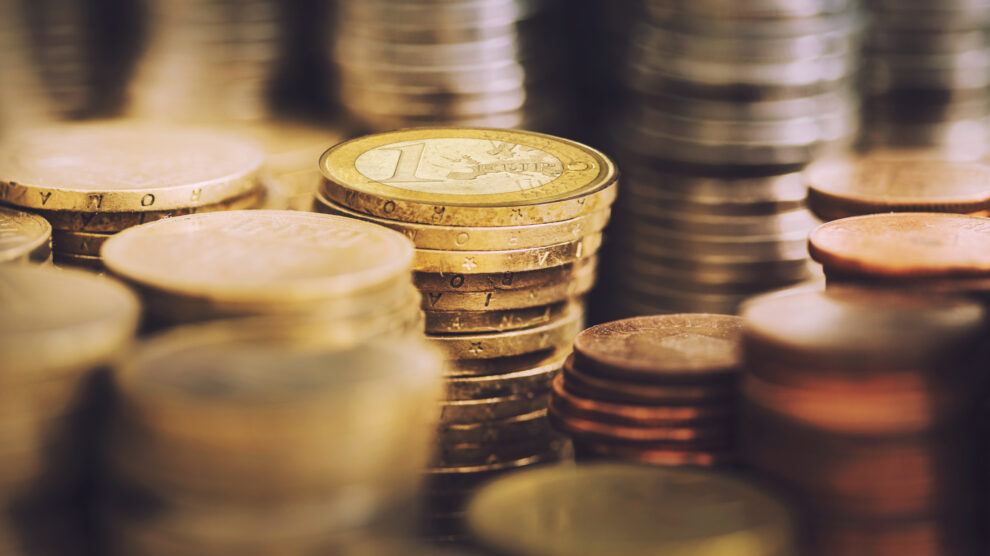
Six months on, Bulgaria’s feared price shock never came. Romania, watching closely next door, should note where the real trouble truly lies.
Just after midnight on January 1, with fireworks bursting over the headquarters of the Bulgarian National Bank in Sofia, Christine Lagarde, president of the European Central Bank (ECB), welcomed the country “to the euro family”. The lev, in circulation since 1880, was on its way out. By the end of the month the central bank’s governor, Dimitar Radev (no relation to the politician about to take over the story), reported that euro notes and coins already made up 70 per cent of the cash in people’s pockets.
Writing in April, Ginevra Aguiari and Matteo Falagiarda, with two colleagues at the ECB, found that the switch had left only a faint mark, mostly on services such as haircuts and restaurant meals. On the harmonised measure the bank follows, annual inflation slipped from 3.5 per cent in December to 2.3 in January and 2.1 in February. Some restaurateurs reprinted their menus, as their counterparts in Croatia had done two years before. Rents and personal-care prices rose faster than usual, while energy and most manufactured goods came down.
In a paper last November, Ferdinand Dreher and Nils Hernborg, two of the ECB’s economists, had noted that support for the euro tends to climb about 11 points once people start spending it. So it did. Backing crossed half for the first time in years in February, reaching 54 per cent, against the 53 per cent who had opposed entry in a poll the previous March. Thousands had marched against the changeover through 2025, some waving Russian flags.
In mid-May S&P Global shifted Bulgaria’s outlook to positive, citing the cushion of European Central Bank liquidity that membership brings; it and Fitch had already lifted the rating to BBB+ on the accession decision. Growth had run at 3.1 per cent in 2025, ahead of the euro area, with unemployment at a record low of 3.5 per cent. The central bank puts the saving to companies from vanished exchange costs at roughly one billion leva a year, about 500 million euros. Governor Radev took a seat on the ECB’s Governing Council in January; in February Philip Lane, the bank’s chief economist, told an audience he had valued the governor’s contribution to the rate-setting meeting the week before.
In March, Digital Realty, an American operator of data centres, made its first move into the country, buying Telepoint, an interconnection hub in Sofia. Paula Cogan, who runs the firm’s European arm, called Bulgaria a fast-growing market worth tapping; Sofia already channels internet traffic from the Middle East and Asia. Bulgaria had turned high-income in 2024, with output per head reaching 68 per cent of the EU average, and its start-up scene is busy; the local stock market, by contrast, stays small. Most foreign investment in the country already comes from the euro area, much of it Dutch.
What actually changed
On April 19, the party of Rumen Radev, who had quit the Bulgarian presidency in January to stand, won 131 of the 240 seats in parliament, the first outright majority since 1997, and took office as prime minister on May 8. He had spent the campaign attacking the currency he would inherit, telling crowds to remember which politicians had promised them “the club of the rich”. Entering the National Assembly, he pledged amendments to tighten price controls within days. He kept the brief close: his deputy and finance minister, Galab Donev, had run a caretaker government during the country’s long political crisis.
War in the Middle East had pushed up oil and gas since January, and the country imports most of what it burns. The European Commission’s spring forecast, on May 21, marked inflation up to 4.2 per cent for 2026 and trimmed growth to 2.5 per cent; the World Bank expects price rises to average five per cent, and warns the poorest will lose most. Radev wants Russian oil and gas imports to resume, cheaper fuel that the rest of the bloc is working to give up.
Bulgaria’s adoption of the euro leaves Romania as the only member EU member still outside with a date in view (the others currently have no interest in joining), possibly 2028. The country’s current political crisis (it has been without a permanent government since May) makes that highly optimistic, but its officials are following what happens next door closely. Bulgarians have until close of business today to exchange lev for euros at banks, for free. Queues are likely to be short or non-existent. By March, the central bank had already collected almost nine in ten lev notes and coins.
Photo: Dreamstime.