
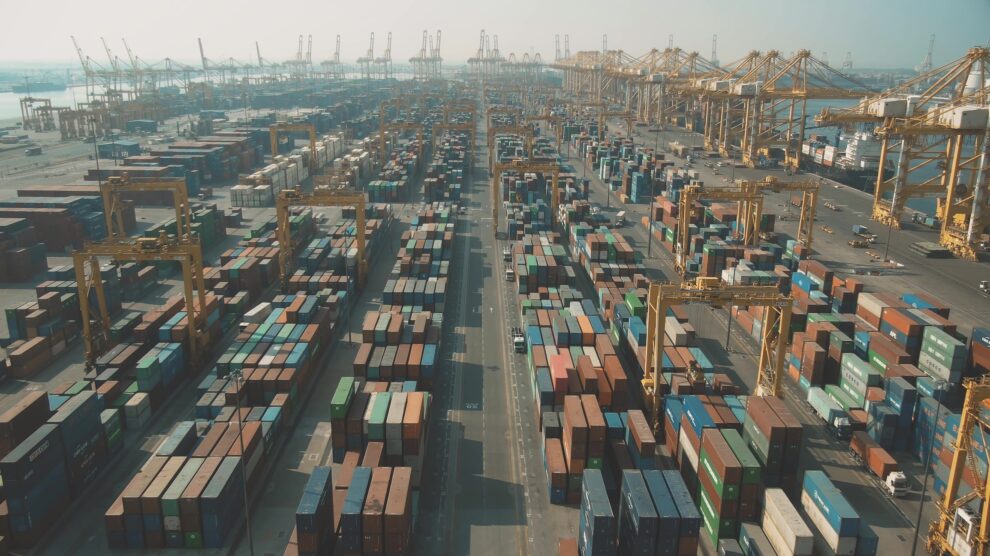
Dubai might dig a new port to skirt the Strait of Hormuz. Too soon, say the sceptics; but how soon is now, when the payoff lands decades on?
When Dubai’s Sheikh Rashid bin Saeed Al Maktoum informed his advisers in the mid-1970s that he intended to carve a deep-water port out of the salt flats at Jebel Ali, more than 30 kilometres down the coast from town, the merchants around him were aghast. The site had no harbour, no settlement, and no obvious reason to exist. Dubai had only just opened Port Rashid, conveniently close to their warehouses. They begged the ruler to think again, or at least to delay. He did neither. When the port opened in 1979, its berths stood largely empty, a monument, the traders grumbled, to one man’s stubbornness.
Jebel Ali now moves 15.5 million containers a year (or at least it did, before the United States began bombing Iran), and sits among the 10 busiest container ports on the planet. It anchors a free zone that houses thousands of companies and which has become a model for others globally.
That is worth bearing in mind as Dubai weighs its next major bet. On July 9, as new American strikes on Iran again brought traffic through the Strait of Hormuz close to a standstill, DP World confirmed it was in talks to build a new multipurpose port at Fujairah, on the country’s east coast. The point of the thing is geography. Fujairah sits on the open Gulf of Oman, outside the strait, so containers could enter and leave the Emirates without threading the world’s most combustible chokepoint, then travel overland by lorry to Dubai and Abu Dhabi. The Financial Times has reported a senior official reckoning that the first phase could be finished within a year and a half.
Sheikh take a bow
Eighteen months sounds heroic for a greenfield port. Jebel Ali took four years to build and the better part of a decade to earn its keep. Quibbling over the schedule, though, misses the larger point. The move makes sense even if it is slow, and even if the guns fall silent tomorrow.
Say Washington and Tehran patch things up next week and the tankers again sail unhindered. What difference does it make? The terminal at Fujairah would still pay, because (whisper it) the argument for it never really turned on this particular war. Hormuz closes, or threatens to, with dreary regularity. During the recent fighting the containers moving through Hormuz slowed to a trickle, on some days not even that. Tankers sat going nowhere fast, transponders switched off to avoid being targeted, and Brent crude jumped as markets panicked. A channel that a fifth of the world’s seaborne oil must squeeze through is a liability in any circumstances. The Saudis have come round to the same view, reviving plans to send more of their crude west to the Red Sea, through pipelines.
Infrastructure, of course, keeps awkward time. Its rewards tend to arrive long after the careers, and sometimes the lives, of the people who planned them have ended. Break ground on something that will not vindicate itself for a generation, and you swallow the cost now while the credit, should it ever come, settles on a successor. Democracies struggle with this; the electoral clock runs too fast. Easier when you are a monarch, or a nation with a memory long enough to wait.
Norway though, has managed it. When the North Sea began giving up its oil, the Norwegians chose not to blow the proceeds, but to instead put them in a state fund set up in 1990 that took its first deposit in 1996. Plenty grumbled at the time that the money sat idle while roads and hospitals went without. You hear an awful lot less of that talk these days. The value of the fund has topped two trillion euros, and Norway owns a piece of nearly every listed company on earth. Shared out, the fund is worth around 340,000 euros for every one of the 5.4 million Norwegians.
None of this proves that boldness always pays, especially when it comes to would-be flagship infrastructure. Canada is currently weighing up the business case for expanding the sub-Arctic Port of Churchill, which sits idle for much of the year. Telling the winners from the follies is hard, and mostly it turns on the question of whether the scheme answers a real need. Dubai’s Jebel Ali did. The emirate’s future lay in trade, and the port served that future, fitting hand in glove with Sheikh Rashid’s ambition. Fujairah is the same sort of bet. Some bets are bigger than others, but Hormuz is a genuine weak point, and any route that avoids it should pay for itself whatever the next couple of weeks (let alone decades) throw up.
Photo: Dreamstime.