
A struggling firm reaches for artificial intelligence as it once reached for innovation. Neither saves a business the sums no longer favour.
Lip-Bu Tan took charge of Intel in March 2025 and started cutting almost at once. His predecessor, Pat Gelsinger, had shed around 15,000 jobs before the board pushed him out that December; by late July Tan had axed roughly 21,000 more and scrapped planned fabrication plants in Germany and Poland. Intel had spent decades at the frontier of chip design, and billions on the research to stay there. In 2024 it lost 18.8 billion US dollars, its first annual loss since 1986.
Intel is betting on artificial intelligence to climb back, reorganising around AI chips even as it sheds staff. It has plenty of company, and thin odds. Aditya Challapally and colleagues at the Massachusetts Institute of Technology (MIT) published a study in July 2025 that tracked 300 corporate deployments of generative AI. They found that 95 per cent had moved the profit-and-loss account not at all, though firms had spent 30 to 40 billion US dollars getting there. The fault, Challapally told Fortune, lay not in the models but in how companies bolted them on: a “learning gap” rather than a technical one.
Edtech firm Chegg partnered with OpenAI in April 2023 to build CheggMate, a chatbot tutor for the students its homework-help service was already losing to free ChatGPT. It did not hold them. Revenue fell about 30 per cent in the first quarter of 2025; Nathan Schultz, the chief executive, cut 248 staff that May and a further 388 in October, blaming “the new realities of AI”. Dan Rosensweig, who had run Chegg through its pandemic boom, returned to the top job in October 2025, with the shares down 99 per cent from their 2021 peak.
Steve Sasson, an engineer at Eastman Kodak, built the first digital camera in 1975, a toaster-sized box that wrote black-and-white images to cassette tape. Kodak patented it in 1978 and then sat on it, wary of cannibalising the film business that paid everyone’s wages. Japanese rivals showed no such restraint. Antonio Perez, who ran Kodak in its final years, spent them suing Apple and others over the very patents the firm had never turned into products; in January 2012 Kodak filed for Chapter 11 with 5.1 billion US dollars of assets against 6.75 billion of debt.
Anne Wojcicki co-founded 23andMe in 2006 and promised to remake medicine by reading customers’ DNA from a mailed saliva sample. Millions bought the kits, and the company floated in 2021 at a valuation of about 3.5 billion US dollars. It never found a profitable business model. In November 2024 Wojcicki cut 40 per cent of the staff and shut the drug-development arm; in March 2025 23andMe filed for Chapter 11 and she stepped down as chief executive. Its assets were listed at 277 million US dollars.
A single problem
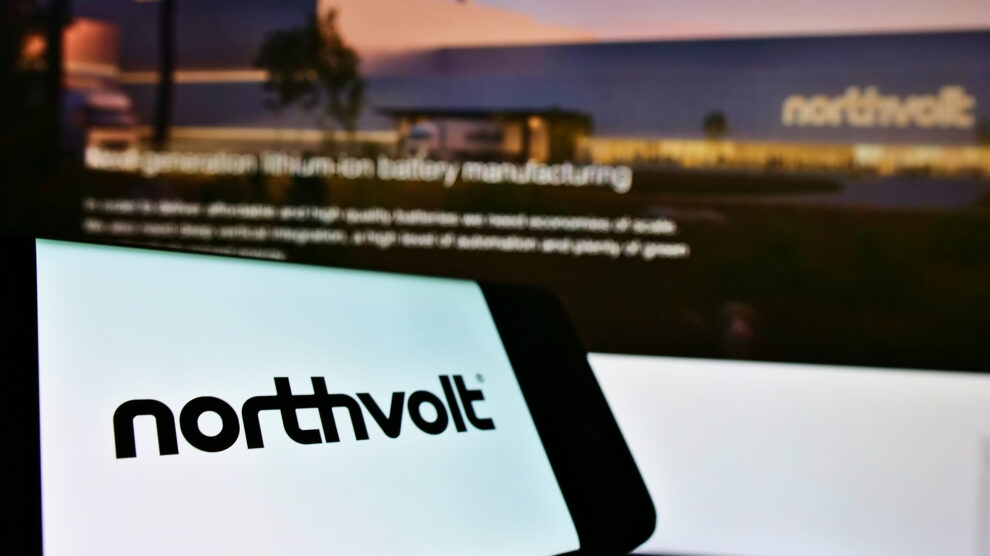
Peter Carlsson, a former Tesla executive, founded Northvolt in 2016 and spent the next eight years raising more than 15 billion US dollars from Goldman Sachs, Volkswagen and others to build Europe’s answer to China’s battery giants. Its flagship plant at Skelleftea in northern Sweden was designed to turn out 16 gigawatt-hours of cells a year; through 2024 it managed barely one. BMW cancelled an order worth two billion US dollars that June. Carlsson stepped down in November as the company sought Chapter 11 protection in America. By the time Northvolt filed for bankruptcy in Sweden, in March 2025, it owed 5.8 billion US dollars.
Warren Buffett put it in a letter to Berkshire Hathaway’s shareholders: “When a management with a reputation for brilliance tackles a business with a reputation for bad economics, it is the reputation of the business that remains intact.”
In July 2025 Tan set out his own plan for Intel: smaller teams, cancelled side-projects and a foundry that would take on outside customers before building fresh capacity. The MIT team had found the same approach among the five per cent of AI projects that returned money. Those firms took one task, built it into a live workflow and measured the result. Challapally pointed to young start-ups whose revenue had climbed from nothing to 20 million US dollars in a year after they fixed on a single problem.
A court-appointed trustee in Sweden now controls what remains of Northvolt, selling the Skelleftea plant, its machinery and its patents to meet the claims against it. The company Peter Carlsson founded had been valued at 12 billion US dollars a year before it collapsed.
Photo: Dreamstime.