
The proposed pan-European corporate form could free Central Europe’s start-ups from disguising their origins behind Western-sounding brands.
When the European Commission tabled its proposal for a 28th corporate regime in March—a new company form officially branded ‘EU Inc.—it sparked the usual pushback. In Brussels, the debate quickly became bogged down in fears over labour rights and administrative harmonisation. Seen from Warsaw, Bucharest or Prague, however, the picture looks entirely different. For Central and Eastern Europe (CEE), EU Inc. is not merely an administrative shortcut; it is a tool of economic emancipation and a great equaliser on the global market.
To understand why this legal framework matters so much to the ‘New Europe’, one must look at a persistent bias known as the country-of-origin effect. For decades, brilliant companies from our region have laboured under an unspoken stigma, with Western investors and consumers subconsciously equating Eastern European origins with lower quality or higher risk.
To survive and expand internationally, leading companies from Poland and its neighbours had to resort to a costly strategy of ‘foreign branding’. Consider Gino Rossi, a footwear brand that sounds like an artisanal workshop in Milan but was built in the provincial town of Słupsk. Or Big Star: the denim label was born in Basel, yet it was entrepreneurs from Kalisz who built its European business and ultimately bought the brand outright—well aware that jeans sell better under a Western badge. Eveline Cosmetics, a powerhouse headquartered just outside Warsaw, stamps ‘Paris’ on its packaging in export markets such as the United Arab Emirates, where the brand sells strongly—a French accent doing the work a Polish address supposedly cannot.
These companies hid their origins behind foreign-sounding names or letterbox offices in Western capitals simply to compete on equal terms. Today, a new generation of tech founders faces exactly the same dilemma.
A start-up with a brilliant idea born in Warsaw often finds that venture capitalists apply an implicit ‘risk discount’ simply because of its local corporate address. The solution? Founders are all but forced to pack their bags and register in Delaware or London. We are voluntarily exporting our intellectual property, our tax revenues and our brightest minds—all to secure a ‘global’ stamp of approval.
This is precisely where EU Inc. changes the game. By allowing founders to set up a unified European company online within 48 hours, for as little as 100 euros, under a single legal framework valid across all 27 member states, the EU is offering something invaluable: a brand.
Replacing a local corporate tag with a unified European identity democratises prestige. It gives an innovator from CEE the same legal and reputational starting line as a counterpart in Paris or Berlin. EU Inc. creates a powerful ‘Made in Europe’ meta-brand that shields start-ups from regional bias, letting entrepreneurs compete on the merit of their products and services rather than burn capital on masking their origins.
In the European Parliament, however, the file’s rapporteur, German Socialist MEP René Repasi, wants to ring-fence national labour protections and restrict the new regime to young start-ups, fearing it could otherwise become a vehicle for circumventing workers’ rights. Labour rights are essential. But watering EU Inc. down with complex, paralysing carve-outs would defeat its core purpose. The goal is to make Europe competitive with the United States and China—not to create another unusable legal ghost like the original Societas Europaea, which proved too cumbersome for agile start-ups.
If Europe truly wants strategic autonomy, it must stop treating entrepreneurs as suspects. Central Europe is a powerhouse of innovation, but its potential is bottlenecked by 27 different corporate codes and lingering geopolitical stigma.
EU Inc. offers a way out. It is a declaration that a great idea is a European idea, whether it originates in Munich or Masovia. Brussels must push this project over the line—not just to cut red tape, but to finally level the playing field for the entire continent.
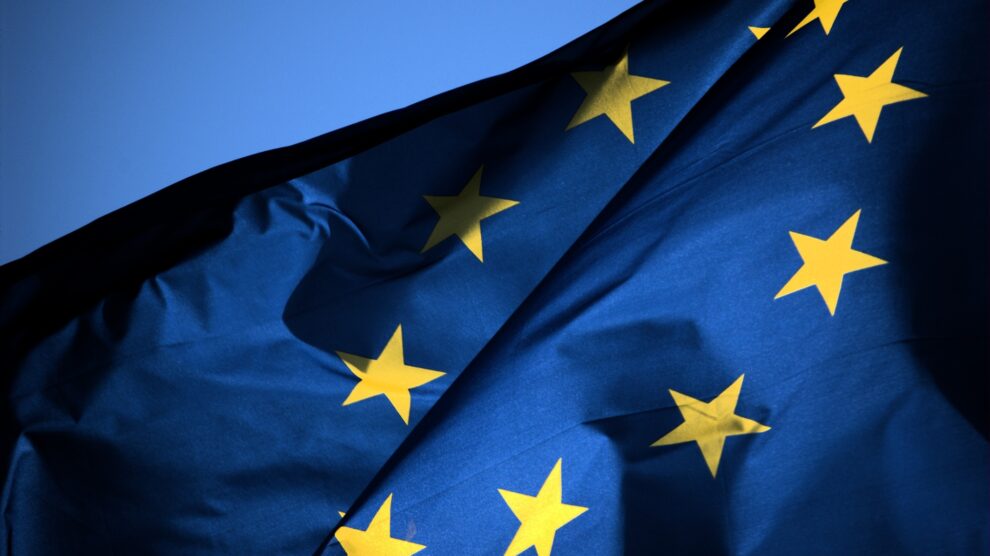
Photo: Dreamstime.