
What India’s financial ambitions can teach Central and Eastern Europe’s emerging stock exchange alliance about scale, connectivity and ambition.
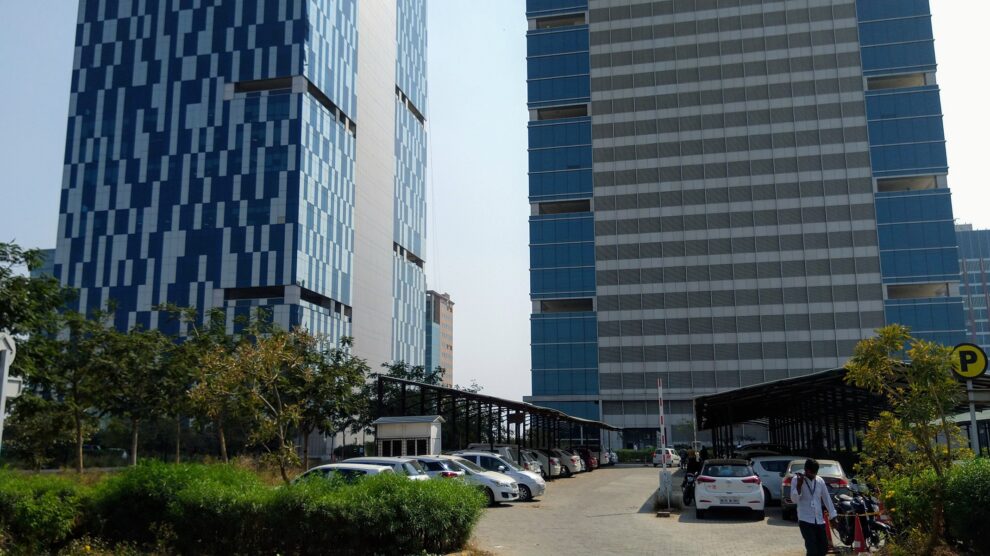
In November I visited GIFT City, the Gujarat International Finance Tec-City rising between Ahmedabad and Gandhinagar. The towers are impressive (the place is growing fast) but the intent behind them struck me more. India no longer wants only to receive global capital. It wants a larger share of the business of handling it: the banking, listings, fund management, aircraft leasing and treasury operations that for years went to Singapore, Dubai or Mauritius.
I left with a question that has little to do with India. For three decades Central and Eastern Europe has sold itself as a place to build things: factories, shared-service centres, tech hubs, and more recently companies that compete in global markets. So what does the region want from finance? India decided to build a financial city. CEE should ask whether it can build a financial network.
Bringing finance home
GIFT City is more than a modern business district. India looked at how much of the financial activity tied to its own companies and investors was being booked elsewhere, and decided to compete for it. The tool was a single regulator. The International Financial Services Centres Authority, set up in April 2020, replaced a patchwork of supervisors with one rulebook for the zone.
The numbers since then are telling. By March 2026, IFSCA counted 1,147 registered and authorised entities. Banking assets passed 111 billion US dollars, against 14 billion US dollars in September 2020. JP Morgan, Deutsche Bank, HSBC, Citi and Standard Chartered are all present. None of this means GIFT has unseated Singapore, London or Dubai. It has not. But the direction is clear: India wants to arrange capital flows, take a cut as intermediary and benefit from them, not just receive them.
The lesson for CEE is that financial infrastructure does not simply follow economic power. It can be used to build it.
CEE’s missing half
Central and Eastern Europe has the opposite problem. Its industry is woven into European supply chains. Its banks are solid, its companies are going international, and its pension funds and institutional investors are growing. Its capital markets, however, are still small, shallow and separated by national borders.
The EBRD gave this a number in September 2026. Across Bulgaria, Croatia, Hungary, Poland, Romania, Slovakia and Slovenia, equity market capitalisation averages below 15 per cent of GDP, against an EU average of about 68 per cent. The national figures run from 1.5 per cent in Slovakia to 30 per cent in Croatia. The bank listed the causes: few IPOs, thin liquidity, a narrow range of instruments, fragmented infrastructure, and EU rules that each country applies and supervises differently.
These are not technicalities. They decide whether a family business can finance its next stage without selling to a foreign buyer, whether households build wealth at home, and whether a fund manager in New York or Singapore sees CEE as one market or as eight small ones. Today that investor likes the regional growth story, then runs into separate exchanges, settlement systems, market practices and liquidity pools. CEE has become an integrated production platform. It has not yet become an integrated investment platform.
The alliance exists. Ambition is the missing ingredient
The good news is that CEE is not starting from scratch. In November 2024, in Bratislava, the exchanges of Bratislava, Budapest, Bucharest, Sofia, Ljubljana, Warsaw and Zagreb signed a memorandum with the EBRD. A month later Skopje joined, the only exchange from outside the EU. In August 2025 the finance ministers of all eight countries signed their own memorandum in Zagreb, so governments now back the project as well. In March 2026 the exchanges sent Brussels a joint position paper on the Savings and Investments Union. The ambitions they have stated include a common regional index and a joint reclassification within MSCI indices. That same September the EBRD launched technical work on the regulatory and supervisory fragmentation that holds the markets apart.
The foundation is therefore in place. The open question is whether eight exchanges that cooperate can become one investable region. That does not require a merger, a single exchange or a new financial capital. It requires a shared strategic purpose and the integration work to back it. This is the coopetition I have argued for elsewhere: competing nationally while pooling resources regionally.
Three lessons from Gujarat: Scale, connectivity, ambition
The first lesson is scale. GIFT City was designed as an ecosystem, not as a trading venue. CEE needs the same mindset: one investment story told to the world, backed by regional indices, ETFs, joint investor roadshows and simpler access to companies listed anywhere in the network. National markets keep their identity. The region gains a size that none of them has alone.
The second is connectivity. India needed a special legal regime. CEE does not, because most of its exchanges already operate inside the EU single market. What the region needs is interoperability, not exceptions: common access arrangements, cheaper cross-border settlement, compatible trading and post-trade systems, and less paperwork. The Baltic states show it can be done. Three small markets that share infrastructure and harmonised practices have become more visible together than they ever were separately.
The third is ambition, meaning ambition tied to a purpose. GIFT City is part of India’s development strategy, not a vanity project. CEE’s financial integration should likewise serve a clear economic agenda. That agenda includes energy security, industrial modernisation, defence production, digital transformation and transport links. It also includes the founders and business families who want growth capital without depending only on banks or selling out. A region that wants to produce global champions, and not just host other people’s factories, needs capital markets able to finance them.
Warsaw and Bucharest: Two engines, one network
Within such a network, Warsaw and Bucharest have complementary roles. Warsaw is the region’s heavyweight. It has the deepest market, a large domestic economy, a mature institutional investor base, and FTSE Russell developed-market status since 2018. Bucharest is the fast riser. It has been an FTSE emerging market since 2020, carried out the largest IPO in its history with Hidroelectrica in 2023, lists energy champions, has a growing base of private pension funds, and sits where the EU meets the Black Sea. Together they show how markets at different stages of development can strengthen each other.
The architecture has to stay open, though. Budapest, Zagreb, Ljubljana, Sofia, Bratislava and Skopje each bring their own companies, institutions and connections. Vienna and Prague, linked through the Wiener Börse group, are outside the eight-exchange initiative but have deep regional expertise. The goal is a network that connects these strengths, not a contest over which city becomes the region’s financial capital.
For Romania there is a further opportunity. Its border with Ukraine and its ties with Moldova create demand for financing in logistics, energy interconnectors and, eventually, reconstruction. A more integrated CEE market could channel private capital into viable projects alongside development banks and public funding. Romania would then be more than a market looking for capital. It could connect investors with opportunities across the EU’s eastern neighbourhood.
From cooperation to agenda
If the alliance wants international weight, five steps stand out. The first is a recognisable CEE investment identity, with joint promotion, shared investor information and regional products, without making national markets less visible. The second is a smoother investor experience, removing the operational friction of buying securities across borders by building on existing EU frameworks. The third is a regional growth-capital push, with coordinated listing support and investor outreach for mid-sized firms, tech companies and family businesses. The fourth is deeper bond markets, making corporate and infrastructure debt easier to see and access, especially for energy, transport and industry. The fifth is a CEE–Ukraine dimension: exploring how regional capital markets could eventually back commercially viable reconstruction projects, without underestimating the security, legal and financing risks.
None of this means copying India’s institutions. A GIFT-style special jurisdiction would not fit the EU’s legal and supervisory architecture. The lesson is about strategy, not about copying the model.
Not against London or Frankfurt
This is also a European project. Brussels has said for years that fragmented capital markets hurt competitiveness, innovation and the use of long-term savings. CEE’s integration could be one of the most concrete regional contributions to the Savings and Investments Union.
It is not a challenge to London, Frankfurt or Paris. CEE companies will keep needing the liquidity, expertise and investor networks of the established centres. The aim is not to repatriate every transaction linked to the region. It is to ensure that more companies can raise capital efficiently, more savings reach productive investment, and more financial expertise and value stay in Central and Eastern Europe. Success should be measured by results: deeper liquidity, more listings, lower barriers, broader participation, and more capital reaching businesses that need it.
The next CEE success story could be financial
What I saw in Gujarat is a reminder that economic ambition should go beyond attracting factories and FDI. It should also cover the institutions that mobilise savings, allocate capital and finance the next generation of companies. India built a purpose-built city to do that. CEE has a different opportunity: to turn financial centres it already has into a connected network. The EBRD-backed alliance provides the institutional base, the Savings and Investments Union the policy framework, and the region’s investment needs the economic case. What is still missing is the political will to put them together.
No one becomes a financial powerhouse by declaration. The status has to be earned through depth, trust and results. India built a financial city. Central and Eastern Europe can build a financial network, and that may be how it finally turns economic potential into financial power.
Photo: Dreamstime.