Brutal regimes rarely want for trading partners. The Taliban are only the latest to find that strategy and commerce outlast moral objection.
Gul Hassan, the Taliban’s ambassador in Moscow, spent the first days of June 2026 working the sidelines of the St Petersburg International Economic Forum. Almost a year earlier, on July 3, 2025, he had presented his credentials to Andrey Rudenko, a Russian deputy foreign minister, and Russia had become the first state to recognise the Taliban government. The St Petersburg forum once drew Western chief executives. This year the American provocateur Candace Owens was among its better-known guests. Russian officials put trade with Afghanistan at around one billion US dollars and spoke of reaching three billion.
In October 2025 Gurbanguly Berdimuhamedov, Turkmenistan’s former president and the power behind its current one (his son), attended a ceremony in Herat to begin work on the Afghan stretch of the TAPI gas pipeline, a scheme first sketched in the 1990s. Four months later Mullah Abdul Ghani Baradar, the Taliban’s deputy prime minister, sat down in the same city with Rashid Meredov, Turkmenistan’s foreign minister, to discuss the pipeline and a power line. Uzbekistan has gone further. Jasurbek Choriev, a deputy transport minister, has costed a trans-Afghan railway to Pakistani ports at 4.6 billion US dollars; the three governments signed a framework agreement in Kabul in July 2025.
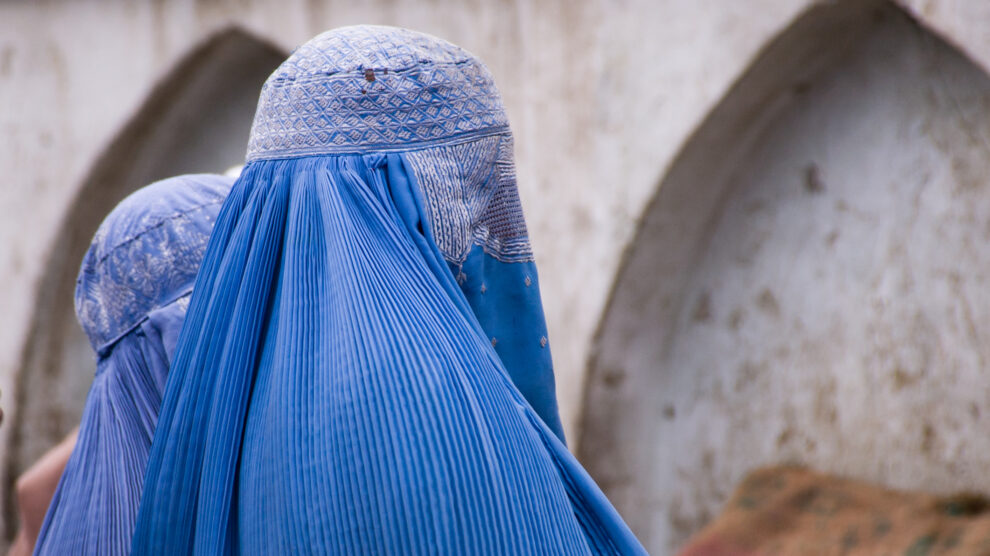
On July 8, 2025, five days after Russia’s recognition of the Taliban, the International Criminal Court issued arrest warrants for Haibatullah Akhundzada, the Taliban’s supreme leader, and Abdul Hakim Haqqani, its chief justice, accusing them of persecuting women and girls. Richard Bennett, the United Nations special rapporteur for Afghanistan, welcomed the warrants and pressed states to withhold recognition. Liz Evenson of Human Rights Watch called them a path to justice. By then the Taliban had barred girls from school beyond the sixth grade and shut most women out of paid work, the edicts the warrants cited.
Previous convictions
In 1997 Unocal, a Californian oil company, flew a Taliban delegation to Texas to lobby for a trans-Afghan pipeline, and hired Robert Oakley, a former American ambassador to Pakistan, to ease its path. The courtship collapsed in December 1998, after al-Qaeda bombed two American embassies in east Africa and Unocal abandoned the consortium. A Chinese state company later picked up the thread: in 2023 it signed an oil deal in the Amu Darya basin, one of the first big foreign contracts of the Taliban’s second spell in power. The pipeline Unocal wanted is the one Berdimuhamedov came to Herat to start.
In late 1979 Leonard Woodcock, the American ambassador in Beijing, told Prince Norodom Sihanouk that his government disliked the Khmer Rouge but regarded it as the only credible force fighting Vietnam. The logic held for a decade. Deng Xiaoping had already struck a bargain with Kriangsak Chamanan, Thailand’s prime minister, who sheltered Pol Pot’s fighters in return for an end to Chinese support for Thai communists. China sent the Khmer Rouge at least one billion US dollars in arms through the 1980s, and Britain’s Special Air Service trained the non-communist rebels in its coalition from 1985. Thiounn Prasith, the movement’s envoy, held Cambodia’s United Nations seat until 1993, 14 years after the killing fields.
Marc Rich, a commodities trader, broke an international embargo to sell oil to apartheid South Africa, and went on trading from Switzerland after his indictment in New York in 1983. Ronald Reagan and Margaret Thatcher resisted comprehensive sanctions well into the 1980s, preferring what Chester Crocker, an American diplomat, termed “constructive engagement”. South African gold and platinum kept finding buyers throughout.
Afghanistan is landlocked. It holds gas reserves and sits astride the transit corridors between Central and South Asia. With some 40 million people, it is worth courting whoever governs it, and the cost of shunning it falls on the neighbours who must trade across it. Billions of dollars in its central-bank reserves sit frozen in Western accounts, and its banks are largely cut off from the global system. That has pushed the Taliban towards Russia, China, and Uzbekistan. Sanctions and the warrants have raised the cost of doing business in Kabul; trade has grown anyway.
Hannah Neumann, a German member of the European Parliament, objected this month when the European Union, whose own diplomats had warned that the Taliban’s treatment of women might amount to gender persecution, prepared to receive a delegation from Kabul to discuss deporting Afghans from European soil. Neumann warned that governments which trade principle for migration deals forfeit both their credibility and their security. The invitation stood.
Photo: Dreamstime.