Collaboration between researchers and industry are driving an increase in knowledge/information exchange, and the IT University of Copenhagen is one of the key institutions leading the trend.
A special focus on IT, with interdisciplinary knowledge between computer science, business IT and digital design is what makes the IT University of Copenhagen (ITU) – with its 2,300 students and over 200 researchers – stand out. This multidisciplinary approach provides not only an education in digital and technical skills within IT but can also educate an individual in how to lead in a constantly changing world of IT, how to prepare for the technology-induced stress placed on employees and how to evaluate the value and ethical practices of IT.
For Carolina Velasco, business unit manager of ITU’s Open Entrepreneurship initiative, the real gem is increasing the utilisation and impact of the university’s research on industry and society.
Open Entrepreneurship is a Danish initiative aimed at turning world-class research into world class companies. The university matches researcher(s) with experienced external entrepreneurs to create more impact from research and develop sustainable businesses.
For Ms Velasco there are potentially three areas of focus: innovation, growth and impact.
“From a university perspective, a pillar such as ‘growth’ can mean educating and upskilling more people, whereas ‘impact’ can include who is getting access to use this research, what is the societal impact and how will it impact the economy?”, she says.
In order to achieve this outcome, we cannot forget about the people who interact with the product and technology. This is why Ms Velasco defines her work at ITU as technology-led and people-centric IT and seeks to build partnerships with universities and companies with similar values.
“Right now, most international/industry collaborations happen directly with the researchers,” she explains. “But the same collaboration can be strategically anchored between an entire university and partners in the industry/public sector, which can leverage more individuals across more areas. The diversity in partnerships are beneficial to research and innovation because you can create something that begins to include, belong, and work for everyone. That’s why we hope in the future to have more partnerships both in Denmark and abroad that align with our IT strategic focus and values.”
Gender balance
Already, 14 per cent of ITU’s students come from abroad. People like Miruna Vozaru, who graduated from ITU in 2017. Born in Romania she moved to Copenhagen to study game design and now works as a level designer for Tactile Entertainment, where she is developing a bubble shooter game.
“I chose ITU because I liked the curriculum, the teachers and the opportunity to adjust the programme to your own interests,” she recalls. “I ended up focusing on both game design and game theory and really appreciated the chance to have a dual specialisation. It was a great choice – I loved how ITU encourages group work.”
Miruna was one of 73 women enrolled in the graduate programme; more than 50 per cent of the class.
“We are delighted that many women, as well as men, see opportunities in combining a non-IT background with software development,” comments Peter Sestoft, head of the Computer Science department. “It is important that women are as much a part of digital development as men. ITU is making a big effort to attract more women to the technical IT education programmes, and it is fantastic that this has resulted in an even gender balance in the Software Design programme this year.”
While more than 50 per cent graduates are women, this percentage decreases when it comes to research.
‘Be creative, fail, and take intelligent risks’
Currently there are five research centres and seven labs. Labs take the theory that has been taught in class and find concrete applications, working with projects directly from companies. On the other hand, a research centre includes a focal area with broader application areas like our newly added Center for Information Security and Trust (CISAT).
“SMEs and companies come here and work with the students from the labs,” explains Ms Velasco. “Students have a semester to develop recommendations and sometimes even solve a problem.”
It is a win-win for both the companies and the students. And just as Miruna Vozaru did, companies from emerging Europe can find a good match with ITU.
“A good fit for us is not about sending us your coding needs to develop your work,” says Ms Velasco. “Instead, if your project provides students with the opportunity for education and learning, where they can contribute and then use the learning experience towards their professional development, then it is a good fit.”
The university must now collaborate closely with stakeholders in Denmark on both research and teaching, and a well-functioning market for IT expertise in Denmark has to be well-connected to international IT expertise.
As Ms Velasco sees it, the university creates a culture where people can be creative, fail and take intelligent risks while contributing to a positive impact through the value of IT. To achieve this, it is important to collaborate with external partners and countries with like-minded values.
—
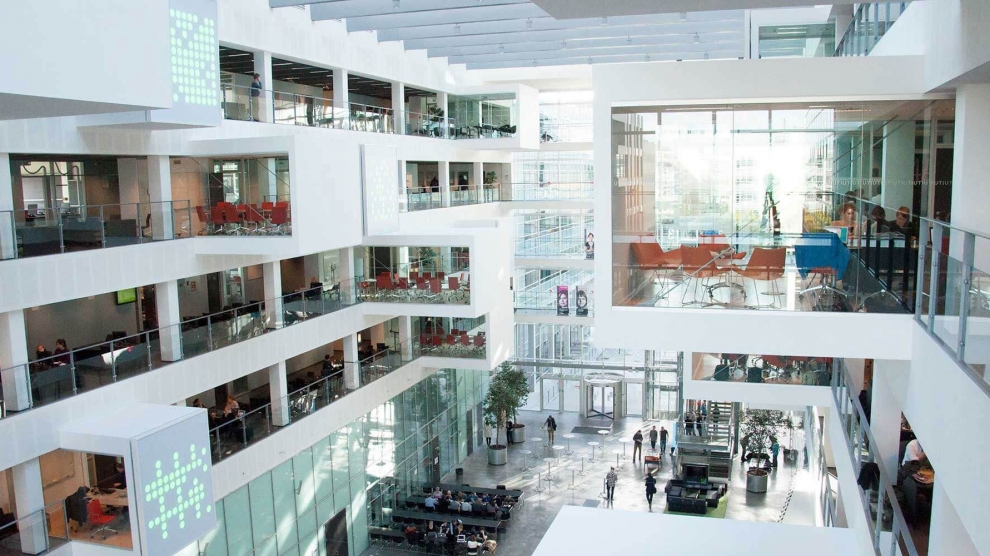
Photo: ITU