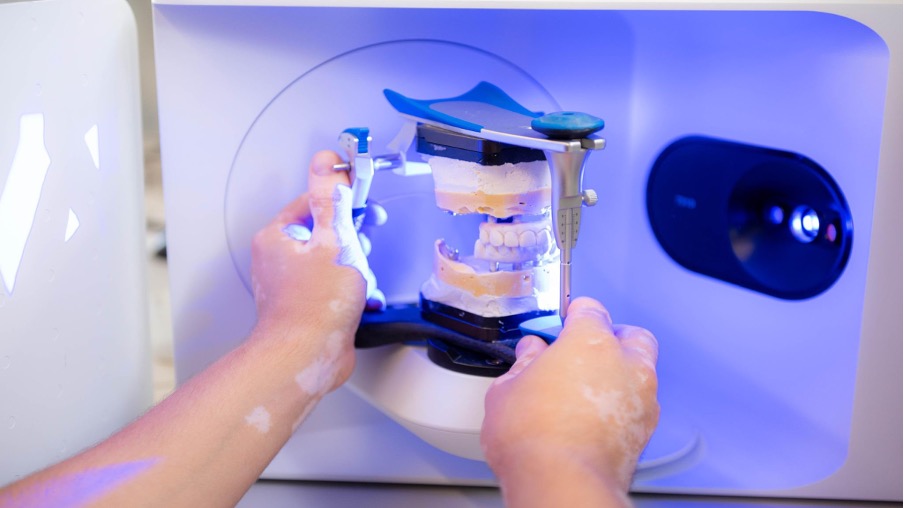
Over the past five years, the Republic of Moldova has strengthened its position on the international map in two strategically important sectors — medical and educational tourism. An increasing number of international patients are choosing to travel for high-quality treatments at competitive prices, while private clinics in Moldova are fulfilling this demand with services that meet international standards, enabling savings of up to 90 per cent compared to costs in their home countries.
At the same time, the number of international students choosing to study medicine and pharmacy in Chisinau is steadily increasing, drawn by modern curricula, global recognition, and affordable tuition. By doing so, Moldova is not only providing healthcare but also training future professionals, delivering education in line with European standards.
Accelerated growth in medical tourism
Moldova’s healthcare services sector is showing strong momentum on international markets. In just five years, exports in this field have nearly tripled. The figures speak for themselves: in 2020, medical services provided to foreign patients generated 25.1 million US dollars, while by 2024 revenues had reached approximately 64.4 million US dollars.
This growth is evident not only on an annual basis but also from one quarter to the next. In the first quarter of 2024, medical service exports totalled 14.09 million US dollars, compared to 16.49 million US dollars in the first quarter of 2025 — an increase of nearly 17 per cent.
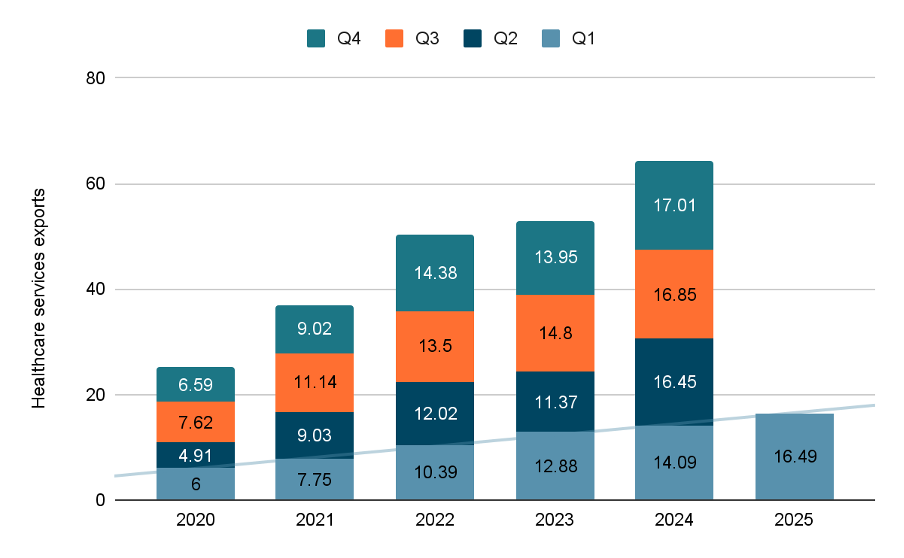
Medical tourism — A growing pillar of the economy
Moldova primarily attracts patients from Romania and Italy, as well as from Ukraine, Germany, Poland, Switzerland, the United Kingdom, Israel, Canada, and the United States. The most sought-after services include dentistry, cosmetic surgery, ophthalmology, in vitro fertilisation, and complex medical procedures.
Experts estimate that the country is currently utilising only around five per cent of its potential, with the capacity to reach an annual export volume of medical services worth 1.5 billion US dollars.
International recognition and leadership in medical tourism
A milestone for Moldova’s international recognition was its election to lead the Global Healthcare Travel Council (GHTC) for the 2024–26 term, surpassing countries such as Germany and Saudi Arabia.
In this context, Andrei Revenco, founder and Executive Director of the Medical Tourism Association of Moldova, stated: “When we launched this project, I was certain that our country could become not only a regional hub for medical tourism but also a reference point for patients worldwide. We have exceptional specialists and competitive prices, and we can pair their expertise with our beautiful landscapes, national cuisine, and world-class wines. What we need now is to develop our infrastructure — including airport facilities to improve connections with major capitals — to digitise our medical system, and, of course, to confidently promote our country on the international stage.”
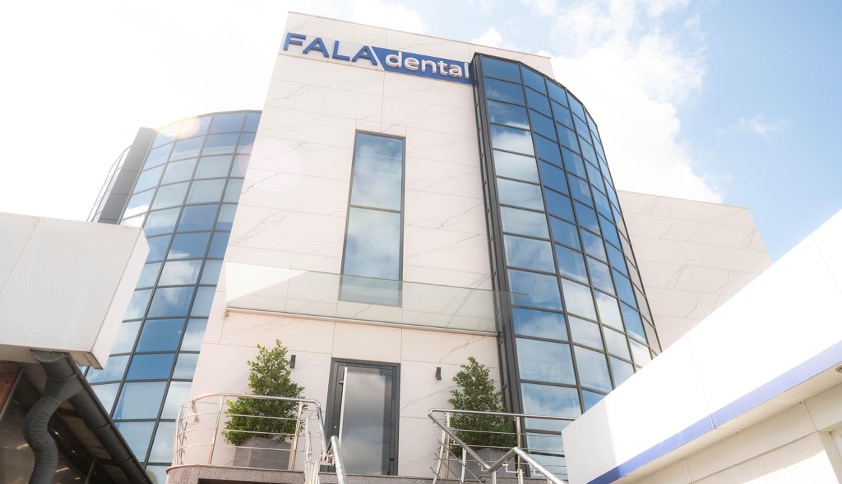
For international patients, the most attractive segment is dentistry — a fact confirmed by Professor Valeriu Fala, founder of Fala Dental Clinic.
“An increasing number of patients from the diaspora, as well as from countries such as Italy, Romania, France, Germany, the US, and Canada, choose our clinics for complex medical treatments, particularly in masticatory system rehabilitation. These treatments involve multidisciplinary teams — from dentists to neurologists, physiotherapists, and alternative medicine specialists — and the quality-to-price ratio is a decisive factor, with the same procedures being up to five times more affordable than in developed countries,” stated Fala.
In terms of educational service exports, Moldova has recorded a 134 per cent increase over the past five years — from 10.66 million US dollars in the first quarter of 2020 to 24.91 million US dollars in the first quarter of 2025. The majority of students come from neighbouring countries, attracted by international programmes, affordable costs, and the prospects offered by potential European integration.
This content has been produced in collaboration with a partner organisation through our Global Visibility Programme. Our programme helps companies and organisations boost their digital presence and strengthen the thought leadership of their experts.