The dominance of AI and defence investments point to a maturing, more focused regional ecosystem.
Baltic start-up funding rose in 2025, with total venture capital deployed in Lithuania, Latvia, and Estonia start-ups reaching 607 million euros, up from 505 million euros in 2024.
The details of this trend are unpacked in the newly released annual Baltic Startup Funding Report, prepared by Baltic funds FIRSTPICK and Practica Capital. The report draws on both market research and original data from interviews with founders, offering an up-to-date, inside view of investment flows and changing funding patterns across the Baltic region.
The report’s findings confirm the structural maturing of the Baltic start-up ecosystem in 2025, as investors in the region prioritised quality over volume, with more capital going to experienced founders. Overall, investments concentrated in fields such as artificial intelligence, defence, and energy.
Regional leaders and standout deals in 2025
In 2025, start-ups across the Baltics attracted more capital at every stage, from pre-seed to growth. Average round sizes increased, as early-stage companies secured larger investments even while the total number of deals stayed about the same. Notable rounds included Sort A Brick from Lithuania raising 1.5 million euros at pre-seed, the Latvian AI platform Trace.Space securing a four million euros seed round, and Estonia’s defence tech Wayren closing a 7.9 million euros seed round.
Large funding rounds across all stages signalled an overall focus on quality investments. While Series A rounds in 2025 were fewer compared to previous years, total capital raised was higher than in 2024. For example, Lithuania saw Cast AI attract a 98 million euros Series A led by G2, Latvia’s Aerones closed a 53.1 million euros round with Activate Capital, and Estonia’s agentic AI platform Pactum secured a 47.3 million euros Series A round.
“It was a fantastic year for Baltic start-ups: companies raised more capital than the year before, with funding growth visible across all stages,” says Andra Bagdonaitė, partner at FIRSTPICK. “What’s especially encouraging is the rising participation of tier-one international VCs, signalling growing confidence in the region’s ability to produce globally relevant companies. With roughly 300 million euros of fresh dry powder now available from newly raised Baltic-focused funds, the market enters 2026 with solid momentum and real capacity to back the next wave of growth,”
Experienced founders and investment flows
One key insight the report notes is that in 2025, the founders who raised capital were typically experienced professionals with backgrounds closely tied to their start-ups. Data from the report shows that half of the funded founders had previously launched a start-up, while 78 per cent had prior work experience directly linked to the companies they now lead. In addition, 77 per cent of funded founders held team leadership positions before starting their most recent ventures.
“Capital in the Baltics is consolidating around fewer but larger checks, backing teams with operational excellence, usually led by domain experts or serial founders,” notes Donatas Keras, partner at Practica Capital. “While AI remains the primary investment focus, there is a strong momentum in defence, energy, and infrastructure. We believe the most interesting opportunities in the future will emerge from unexpected corners: new sectors, unique founder profiles, and regional hubs.”
This insight is reflected in the report’s data, which shows that AI attracted the most venture capital in the Baltics in 2025, accounting for 46 per cent of all capital raised, compared to 35.5 per cent in Europe and 65.4per cent in the US. Other important sectors drawing investment were hardware at 21 per cent, cloud at 10 per cent, fintech at nine per cent, energy at seven per cent, and defence at five per cent.
Rise of community-driven growth
Alongside traditional support, the report finds a notable effort to strengthen the Baltic start-up ecosystem through community-driven growth. This is evident in the higher frequency of hackathons and the rise of ‘hacker houses’, such as basedspace_ in Vilnius, ruum in Tallinn, and Shipyard in Riga. These community spaces enable new teams to quickly test and develop start-up ideas, early products. About 70 start-ups have already come out of these spaces, with eight securing their first investments in 2025.
“Hacker houses are opening up entrepreneurship to more people by helping creators and operators move faster from concept to company,” says Bagdonaitė. “This shows how grassroots communities are making the Baltic ecosystem more dynamic and accessible, setting the stage for even broader participation and fresh momentum in the years ahead.”
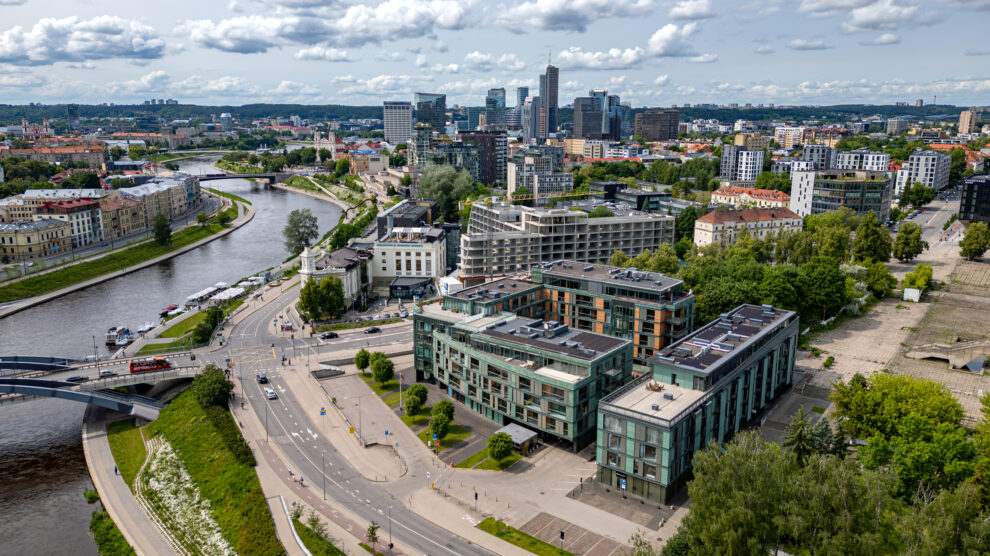
Photo: Dreamstime.