
Kazakhstan’s economy is growing at a decent rate, but its workforce is not. Schools, vocational training, and adult skills must be improved.
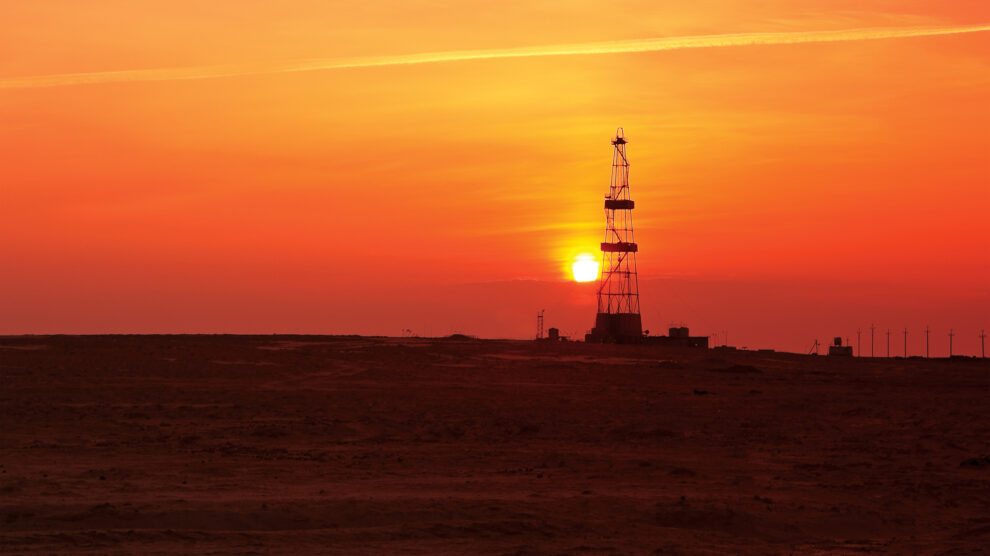
In January 2025, Chevron announced first oil from the Future Growth Project at the Tengiz field in western Kazakhstan. The 48 billion US dollars expansion, nearly a decade in construction, lifted Kazakh oil output by 13.5 per cent over the course of the year and pushed real GDP growth to 6.5 per cent. That figure, published by the World Bank in its Kazakhstan Economic Update this week, was the headline that travelled around the world. The numbers underneath travelled less well.
Tengiz will not do it twice. With the Future Growth Project at name-plate capacity (around one million barrels per day, achieved by May), the World Bank expects growth to slow to 4.6 per cent in 2026 and to converge towards 3.5 per cent by 2028. The rest of the demand-side story rests on consumer credit and quasi-fiscal operations. Concessional lending through Baiterek, the state holding, has reached an estimated 2.4 per cent of GDP, up from around 1.8 per cent over 2021-23. Samruk-Kazyna, the sovereign wealth fund, runs administered tariffs and directed lending of its own. Neither shows up in the headline fiscal balance.
The labour market looks healthy on paper. Official unemployment held at 4.6 per cent in 2025, with around 106,500 jobs added over the year. The trouble is what kind of jobs. Most of the new posts emerged in low-productivity services, a pattern persistent for more than a decade. About a fifth of all workers are self-employed, many of them informally. Net foreign direct investment turned negative in 2025, at minus 0.9 billion US dollars, having been a positive two billion US dollars the year before. With the Tengiz expansion complete; not much else has taken its place.
Household balance sheets are doing the rest of the work. By the fourth quarter of 2025, household debt had reached 51 per cent of wages, surpassing even the level recorded before the 2008-09 banking crisis. Real household debt has nearly doubled since 2020. Real incomes have risen by less than 16 per cent in the same period. Kazakh banks, charging maximum unsecured rates of 46 per cent, posted a return on equity of 28.4 per cent in 2025.
“Kazakhstan’s economy has proven resilient,” said Andrei Mikhnev, the World Bank’s country manager for Kazakhstan, in remarks accompanying the report, “but the path to lasting prosperity runs through productivity, and productivity runs through people.” The special-topic section, some 15 pages on skills and human capital, explains what he meant.
Tengiz hangover
The schools do not deliver. In the most recent PISA round, in 2022, only half of Kazakhstani 15-year-olds reached the minimum proficiency benchmark in mathematics. Just 36 per cent cleared the benchmark in reading. Eighteen per cent met the computer and information literacy threshold measured by the International Computer and Information Literacy Study. PIRLS Grade 4 reading scores fell from 536 in 2016 to 504 in 2021, with the share of pupils performing below the ‘low’ benchmark rising from two to nine per cent. The decline was not unique to Kazakhstan, but the floor was lower to begin with.
Adults fare worse. The 2018 round of the OECD’s Programme for the International Assessment of Adult Competencies (PIAAC) found that 25 per cent of Kazakh adults reached Level 3 literacy, the level at which workplace texts can be interpreted with some complexity. The comparable figure for South Korea was 50 per cent. Only 16 per cent of Kazakh adults cleared minimum proficiency in problem-solving in technology-rich environments. A 2025 World Bank paper measured returns to experience across the region: in Poland and Serbia, hourly earnings rise by 40-60 per cent over a worker’s first decade. The equivalent Kazakh curve runs flat, in some years slightly negative.
The 2024 World Bank Enterprise Survey put “inadequately educated workforce” third on the list of obstacles to firm operations in Kazakhstan, behind tax rates and access to finance. Among firms that had launched a new product or process in the previous three years, the proportion citing skills as a major constraint was 33 per cent, against 20 per cent for the rest. Among firms in the top quartile by pay per worker, the share was 30 per cent. Firms with mostly high-skill staff reported the constraint at 33 per cent, against 13 per cent elsewhere.
Inflation hit 12.3 per cent in December 2025, more than twice the National Bank of Kazakhstan’s five per cent target, where it has sat for five years running. The NBK raised its policy rate to 18 per cent in October 2025 and held it there at its March 2026 meeting. Even at those rates, consumer credit kept expanding at 8.7 per cent in real terms in 2025, sustained by concessional mortgage and car-leasing schemes.
The National Fund holds roughly 20 per cent of GDP in foreign assets and remains the country’s principal fiscal buffer. Public debt has now overtaken those assets, and net financial assets are projected to turn negative over the medium term. Around 80 per cent of Kazakh crude leaves through the Caspian Pipeline Consortium’s Black Sea terminal at Novorossiysk. Ukrainian drones struck the consortium’s Kropotkinskaya pumping station in February 2025, the administrative buildings in September and November, and one of three single-point moorings in November. Kazakhstan’s foreign ministry protested after the November attack; loadings continued through the remaining infrastructure at reduced volume.
Kazakhstan’s growth in 2025 came from a field whose first commercial agreement was signed in 1993 and from household balance sheets that were not stretched in 2020. The report’s recommendations on schools, vocational training and adult skills are sensible enough: set proficiency targets, invest in teachers, scale what works at the Nazarbayev Intellectual Schools to the rest of the system. The previous Kazakhstan Economic Update, published in February 2024, made a similar case. The 2027 edition can be expected to do so again.
Photo: Dreamstime.