

Why mental health has become one of the biggest threats to press freedom, and why journalists increasingly need solid psychological support.
For years journalism has been associated with resilience. Reporters are taught to move from one crisis to the next, to witness tragedy without losing focus and to keep working no matter how heavy the emotional pressure becomes. Across newsrooms around the world journalists are struggling with anxiety, trauma, and burnout at levels the industry is only beginning to acknowledge. What was once known as ‘part of the job’ is now becoming impossible to ignore: journalism is facing a growing mental health crisis, and most media organisations are still not fully prepared to deal with it.
I have worked in journalism since 2017 covering investigations, political developments and crises. Yet throughout those years, nobody ever explained what psychological trauma in journalism actually looks like, or how journalists are supposed to cope with it. Like many others I worked in newsrooms where emotional resilience, exposure to trauma, and the psychological impact of reporting were never openly discussed. There was no guidance on what happens after witnessing traumatic events, no conversations about burnout, anxiety, or emotional exhaustion. Psychological preparedness simply was not considered part of the job even though for many journalists it quietly becomes part of everyday life.
One moment that has stayed with me more than any other was covering Albania’s devastating 2019 earthquake. Like many journalists in the field, I suddenly found myself witnessing scenes no newsroom training could truly prepare someone for. I remember watching victims being pulled from collapsed buildings while, at the same time, trying to keep reporting live updates and sending information back to my newsroom in real time.
What stayed with me long after the story ended was not only the tragedy itself, but the silence that came after it. There were no conversations about trauma, no emotional debriefing, no psychological support, and very little safety infrastructure for journalists exposed to experiences like these. We were expected to move on immediately, as if witnessing human suffering at that scale had no lasting emotional impact.
The culture of ‘normal’
When you look back at it, perhaps the most worrying part is how this lack of support has become something many journalists simply accept as normal.
That culture was built at a time when the biggest threats journalists faced were physical censorship, violence, or political intimidation. Those dangers still exist, but today’s pressure has become far more personal and constant. Modern journalists are now dealing with online harassment, disinformation campaigns, threats, graphic content, financial insecurity, and the exhausting pressure of always being connected. The stress no longer ends when reporters leave the newsroom. It follows them home through their phones, inboxes, and social media feeds.
Recent studies published in 2025 and 2026 show that journalism is facing a serious mental health crisis. But this is no longer just about stress or workplace wellbeing. More and more, it is becoming a press freedom issue, affecting journalists’ ability to continue reporting while facing growing political pressure, financial instability, online attacks, and constant digital harassment.
A 2026 report by UNESCO, UN Women, and the International Center for Journalists revealed how deeply online violence is affecting journalists. The report found that one in four women journalists developed anxiety or depression because of online attacks, while 13 per cent experienced symptoms linked to PTSD. Almost half said the harassment made them hold back or censor themselves online.
The findings show that online attacks are no longer just a ‘social media problem’. In many cases, they have become a form of psychological intimidation designed to silence journalists, discourage investigations, and undermine trust in independent reporting.
Conflict reporting remains one of the most psychologically damaging areas of journalism. A 2026 study published by Cambridge University Press found high rates of PTSD, depression, anxiety, and alcohol-related disorders among reporters from organizations including CNN, The New York Times, Associated Press, NPR, and The Washington Post. Yet despite the trauma they experienced, only a small number reported having access to counseling or mental health support while covering wars and humanitarian crises.
These findings challenge one of journalism’s oldest beliefs: that reporters must stay emotionally detached to do their jobs well. But journalists are human before they are storytellers. Repeatedly witnessing violence, and human suffering leaves emotional scars that do not simply disappear when the story is published. Even the most experienced reporters carry the weight of what they have seen long after the cameras are turned off and the headlines move on.
For freelancers and independent reporters, the pressure is often even heavier. Many work without newsroom support, health insurance, or access to mental health care, forcing them to cope with trauma alone. Therapy is too expensive for many, while others stay silent because they worry that admitting burnout, stress, or anxiety could hurt their reputation or career opportunities.
An industry-wide failure
What makes the crisis even more alarming is that many media organisations still treat mental health as a personal issue rather than an industry-wide failure. But this is no longer only a wellbeing issue it is becoming a press freedom issue. When journalists step away from investigations because of burnout, self-censor under pressure, or leave the profession entirely, independent reporting and democratic accountability begin to weaken.
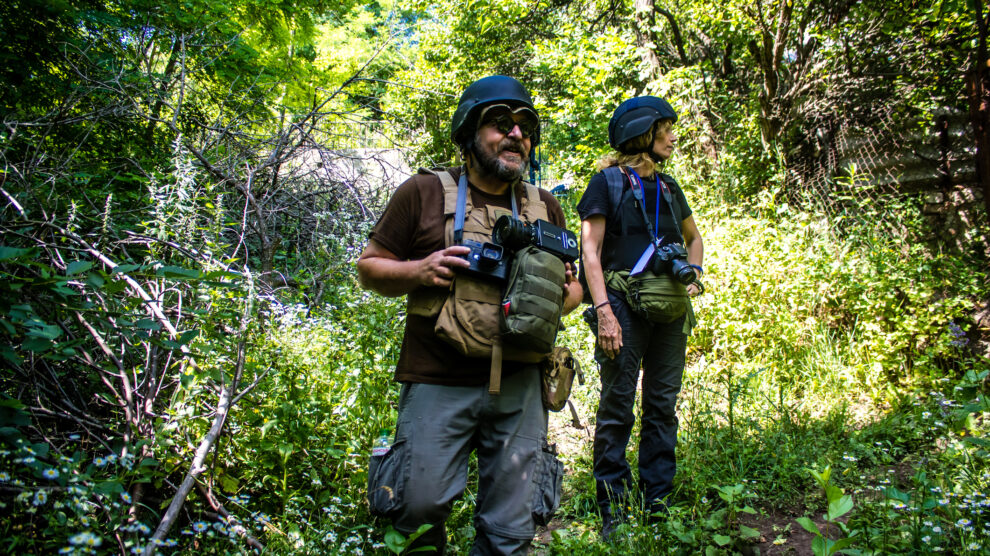
Protecting journalists today means far more than giving them helmets or physical security. It also means protecting their mental health, their emotional wellbeing, and their ability to continue doing this work without being broken by it. Journalists increasingly need psychological support, digital protection, legal assistance, and newsroom cultures that stop treating burnout, trauma, and emotional exhaustion as simply ‘part of the job’.
Some organisations have already started recognizing this crisis. Initiatives by the International Women’s Media Foundation and the Dart Center for Journalism and Trauma have shown that psychological support can genuinely help journalists dealing with trauma, anxiety, and burnout. At the same time, the European Federation of Journalists is calling for mental health protections to become part of newsroom safety standards.
But for many journalists, support still remains difficult to access.
Journalists are expected to report on war, violence, disasters, corruption, and human suffering while hiding the emotional impact these experiences leave behind. That model is becoming increasingly unsustainable.
Mental health can no longer be treated as a personal struggle journalists are expected to carry silently behind newsroom walls. Every day reporters witness war, violence, corruption, disasters, and human suffering while being expected to simply move on to the next story as if none of it leaves a mark. But it does.
Protecting press freedom today is not only about protecting journalists from censorship or physical attacks. It is also about protecting them from burnout, emotional exhaustion, trauma, and the constant psychological pressure of living and reporting in an increasingly hostile digital world.
Photo: Dreamstime.