Reykjavik wants the market without the politics. So do Europe’s wealthiest hold-outs, and Britain, above all, ought to be taking note.
So Iceland will not be joining the European Union anytime soon. Voters on the North Atlantic island decided against resuming accession talks at the weekend, talks which have been on hold since 2013. The result changes little for Iceland’s people, given that the country already enjoys full access to the EU’s Single Market, and is a member of the Schengen passport-free travel area. The result is not a rejection of the EU (Single Market membership means alignment with around 75 per cent of EU laws) more a rejection of even closer ties with it (particularly the common fisheries policy, a key theme of the campaign). EU sceptics have not been slow to suggest otherwise, however. Reform UK leader Nigel Farage said Icelanders had voted “to keep their independence”, which does rather suggest that he believes a country can remain “independent” while simultaneously being a member of both the Single Market and Schengen (both of which he opposes, and would vehemently campaign to stay out of should the UK ever decide to pursue a relationship with the EU similar to Iceland’s).
Brussels has so far reacted to the result with little more than a shrug. There’s disappointment (a small, wealthy country such as Iceland would be an asset to the EU) but as the European Commission returns to work this week after the summer break there will be no inquest. That could be a mistake: the EU would do well to look at just why Icelanders rejected it. Other countries part of the European Free Trade Association (EFTA; Norway and Liechtenstein) also have no short- or even medium-term plans to become full EU members, and neither does Switzerland, which enjoys a similar, if slightly more bespoke, relationship with the bloc.
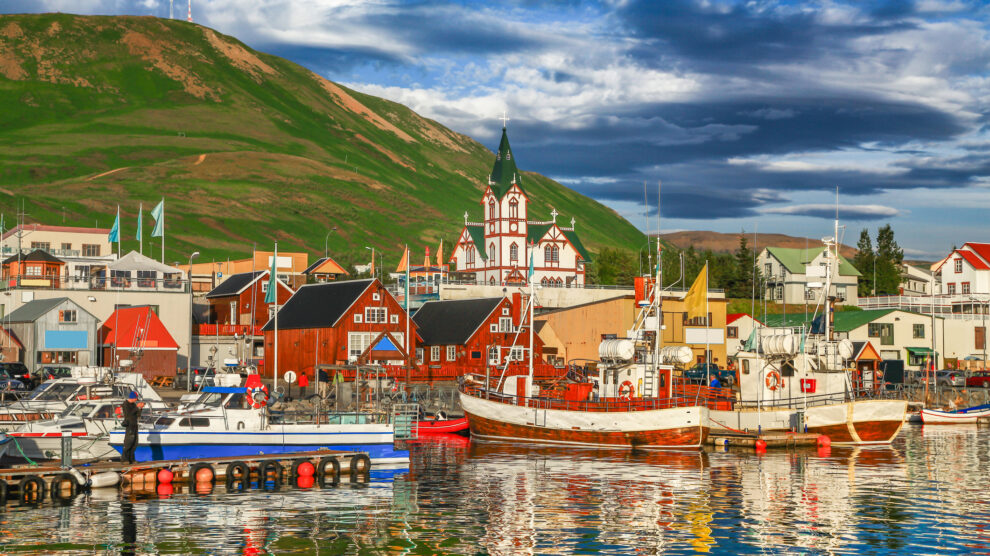
Not that Brussels would need to commission a major report to discover why EFTA members are reluctant to join, given that the reasons are broadly common knowledge. For Iceland, it’s primarily a question of fish, which comprise close to a third of Iceland’s goods exports (the fishermen who catch them once fought three ‘cod wars’ against the UK’s Royal Navy). Allowing Brussels to set fishing quotas as part of the common fisheries policy was never going to be a vote winner on the Icelandic coast. Heidrun Lind Marteinsdottir, who runs Fisheries Iceland said before the vote that the industry was “in our genes”. Ministers campaigning for a ‘Yes’ vote had pointed out that no EU trawler had fished in Icelandic waters for decades, and claimed that little would change. They don’t appear to have been believed.
Then there’s the simple fact that Icelanders are perfectly happy with their current arrangements. They already have the Single Market and passport-free travel, with full EU membership being seen as adding little. Membership would mean Iceland got itself a commissioner, seats in the European Parliament, and a vote (and veto) in the European Council, but that seat at the table would cost more money. Ultimately, Icelanders decided it wasn’t worth it. Kristrun Frostadottir, the prime minister who called the vote and lost, all but conceded the point the next morning, admitting Icelanders are happy with the current arrangements. Offered an all-inclusive deal, Icelanders preferred à la carte.
No shortcuts
Might, however, the Iceland result at least nudge Brussels into opening its doors a little wider to poorer applicants who do want the all-inclusive package (such as the countries of the Western Balkans, Ukraine, and Moldova), if only as a demonstration to the world that the bloc is still attractive? Almost certainly not.
For those countries, the EU offers just the one package. Marta Kos, the enlargement commissioner, told a Tallinn conference in February there would be “no shortcuts” on reforms and no two-tier membership for countries not aligned with EU law. When, in a joint newspaper article, Serbia’s Aleksandar Vučić and Albania’s Edi Rama mooted exactly the kind of EU deal that Iceland and the rest of the EFTA has with the EU (Single Market and Schengen access without the commissioners and the veto), Kos firmly swatted it away. The very deal that keeps Reykjavik and Oslo happy is not on offer for the Balkans.
That’s largely because the two camps want opposite things, not because one is poor and the other wealthy. Iceland, Norway, and Switzerland want the EU’s market but none of the politics that comes with it. Podgorica, Belgrade, Tirana and Chişinău want the politics, the development billions, the security umbrella, and the seat at the table, all of which require reform and alignment that Brussels fears would come to halt were a halfway house on the table. Besides, full accession faces an obstacle that the Iceland vote has done nothing to lower, namely that each new full EU member must be ratified by all current members. Croatia’s accession, the last to be completed (in 2013), took 18 months to ratify in far more agreeable times than today.
Which brings us, as it so often does, back to Britain. Farage cheered that Iceland had chosen “independence” while benefiting from the Single Market and Schengen. He is half right, in a way he would loathe (and he may well come to regret his comments). Take away the Schengen bit, which Britain neither had nor wants, and what remains is something very close to the settlement that would unquestionably suit it best: full Single Market access, the flexible European labour its farms and care homes need, no common agricultural or fishing policies, and a frontier it still polices. Poll after poll says most Britons regret Brexit, but almost as many can’t stand the idea of another divisive referendum on rejoining. An Iceland arrangement, minus Schengen, avoids such rows. It is on offer, proven to work, popular with those countries that have it, and asks nobody to refight the often ugly battles of 2016. All it needs is a British leader brave enough to say the word ‘Iceland’.
Photo: Dreamstime.