
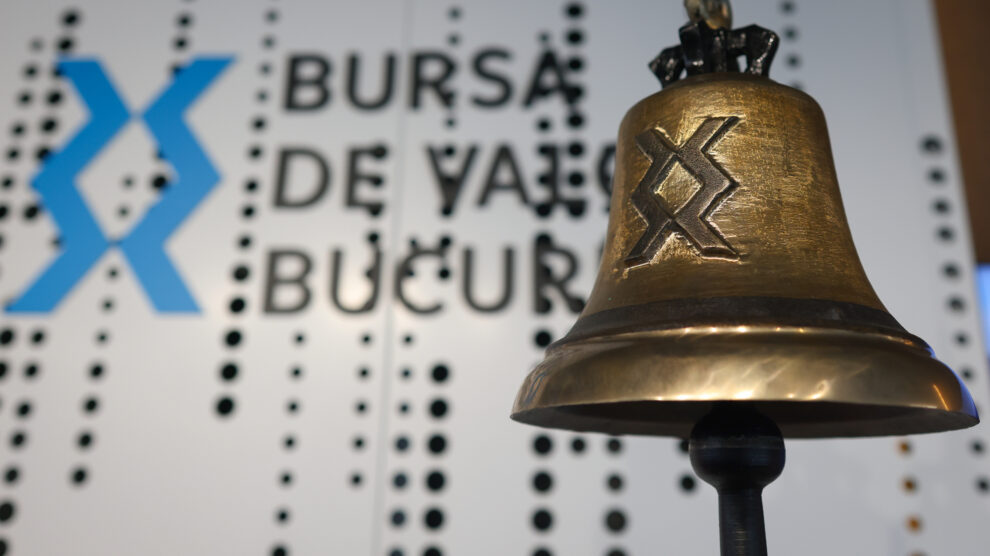
Romania’s stock market is small, unfashionable and, over the past decade, the best-performing in the world. Almost no Romanians own a share.
There is, of course, no such thing as free money, but investors on Romania’s stock exchange might argue that they are currently on to the next best thing. Earlier this month, Divo Pulitika, a board member at InterCapital, an asset manager, published figures showing that the total-return version of Romania’s main stock index had returned 758 per cent over the previous decade in euro terms, dividends reinvested. That placed the Bucharest exchange ahead of Taiwan and the Nasdaq 100, and, on his numbers, made Romania the best-performing equity market in the world over the period. Last November, Pulitika put its valuation at about 11 times earnings and its dividend yield at roughly 4.4 per cent, against 33 times and 0.7 per cent for the Nasdaq.
Also this month PwC Romania published its annual survey of the market, in which Sorin Petre, who leads its valuation practice, recorded that the BET index, which tracks the performance of the most liquid stocks listed on the Bucharest exchange had risen 49 per cent in 2025, its strongest year since 2009, and that the dividend-inclusive version had gained 55 per cent. The combined value of Romanian listed companies passed 100 billion euros for the first time. Petre noted that the gains had come even as Romania carried the largest budget deficit and the highest inflation in the European Union.
It was in July 2023 that the exchange took off for the stratosphere when Hidroelectrica, a state-controlled hydropower producer, began trading after Fondul Proprietatea, an investment fund, sold a 19.94 per cent stake for 1.9 billion euros, the largest flotation in Europe that year and the biggest in the exchange’s history. Radu Hanga, the exchange’s chairman, called it the largest offering the Romanian market had seen; Sebastian Burduja, then the energy minister, called the listing a historic success. The sale valued Hidroelectrica at about 9.4 billion euros and drew a record of nearly 52,000 retail subscription orders, many from first timers. They backed a winner, given that shares in the firm are up more than 80 per cent since then.
A market that defies conventional wisdom
The trend is part of a pattern that defies Romania’s wider woes (besides its deficit and inflation concerns, it has been without a permanent government since the beginning of May). FTSE Russell reclassified Romania from frontier to emerging-market status in September 2020, and in June 2025 MSCI raised it to advanced-frontier status. In August 2025 Remus Vulpescu, the exchange’s chief executive, welcomed FTSE Russell’s decision to keep a dozen Romanian companies in its emerging-market indices and singled out Fidelis, the finance ministry’s tax-free retail bond, as a draw for first-time investors.
In November 2025 Cris-Tim, a meat producer, attracted orders 42 times the shares on offer; in March Electro-Alfa, an engineering group, was 60 times oversubscribed; in June Christian Tour, a travel company, listed after a smaller sale. Romanian retail money dominated all three.
Nevertheless, many Romanians are still missing out. According to PwC, at the end of 2025 the exchange counted about 285,000 active retail investors, up from 226,000 a year earlier and four times the level of 2020, but still only around one in a hundred Romanians. This despite the returns and the fact that investing has never been easier. Two smartphone applications, TradeVille and Investimental, offer quick and easy sign up and broker not just shares but ETFs and bonds. The TradeVille BET Patria ETF, which tracks the largest 17 companies on the exchange, has grown 1,115.19 per cent in value since its launch in August 2012, and 36.64 per cent in the first six months of this year.
Interest in the exchange is likely to only increase given the announcement last month by Interactive Brokers, one of the world’s largest online trading platforms, that it would add companies listed on the Bucharest exchange (including Hidroelectrica and Banca Transilvania) to its offering.
“What makes Romania unusual is its combination of frontier market valuations paired with increasingly developed market regulatory frameworks,” wrote Mihael Antolić in February. “Combined, these create an asymmetrical risk-reward profile that defies conventional efficient market wisdom.” Risks, of course, remain (not least that deficit and the political uncertainty), but the Bucharest exchange does not resemble a bubble. Yet.
Photo: Dreamstime.