
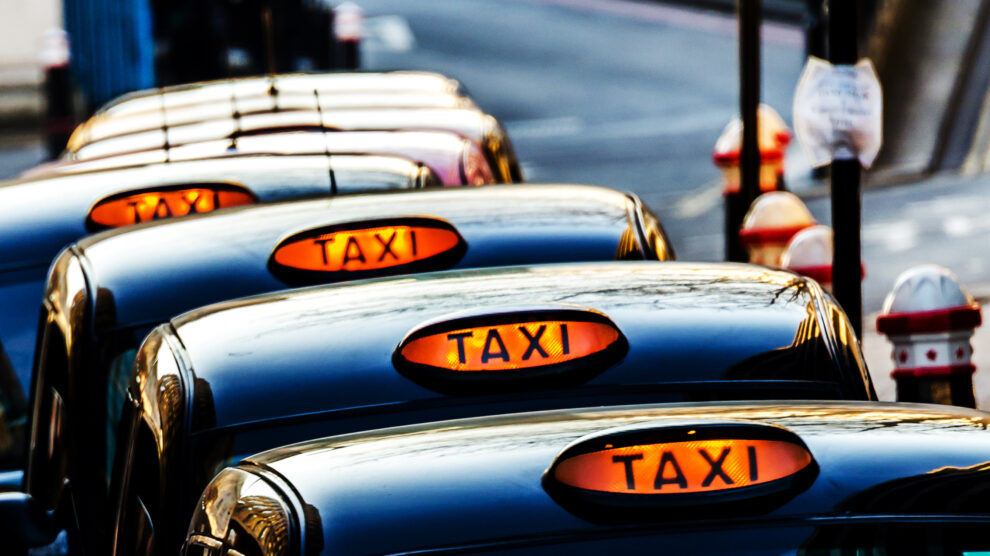
The taxi trade rarely answers ride-hailing with a better cab. Where it can, it answers with the statute book, and calls it fair competition.
There are plenty of things that make any arrival in a new city far more annoying than it should be. An inefficient airport that takes hours to process passengers (an increasingly common theme across Europe this summer, as the EU implements its disastrous Entry/Exit System), a lack of reliable public transport (or, perhaps more frustrating still, reliable public transport that unfathomably needs to be paid for in cash), and, of course, opening up Uber or Bolt only to discover that neither is available. It still happens far more than it should, as traditional taxi lobbies continue to hold sway over local councils eager not to displease them.
Preferring Uber to a local taxi is not always about price. Increasingly, in fact, price is irrelevant, as Uber can rarely these days be called a cheap option. Instead, it’s about convenience. It’s about not being forced to negotiate a price if the metre is suspiciously not working, it’s about not needing to have cash on hand, it’s about not having to explain where you want to go to a taxi driver who may not understand what you’re saying, it’s about receipts being sent directly to your email, it’s about not having to ask a hotel receptionist or restaurant waiter to call you a taxi.
Where the lobby wins outright, the app simply is not there. The Hungarian capital Budapest is one of the most infamous cases, at least in Europe. In January 2016 the city’s taxi drivers blocked the roads around central St Stephen’s Basilica and demanded that Uber be banned. By July the country’s nationalist government (at the time led by Viktor Orbán) had obliged, with a law that let the authorities block apps of any service lacking a traditional vehicle dispatcher. Uber, rather than hire tens or even hundreds of dispatchers, quit the country. It made it back only in 2024, and only then in cooperation with cab company, Főtaxi, that basically means an Uber is a standard taxi that happens to be hailed through its app. Germany has never let Uber run its own drivers at all, and operates by partnering with licensed rental car companies (Mietwagen) and local taxi drivers rather than using private casual drivers. Italy does much the same. In Catalonia, Barcelona (which has tried and failed to get rid of Uber before) is currently mulling a proposed bill that would reduce the number of the city’s private-hire licences from around 900 to 300.
Anything but innovation
Much of these legal shenanigans are the (natural, perhaps) reflex of an industry that would rather change the rules than change, reinvent, innovate, or just simply improve its product. The ride-hailing apps meanwhile, though far from perfect and not without fault, have largely been excellent at innovating at every opportunity. Bolt, founded in Tallinn by Markus Villig in 2013, began as a plain taxi-hailing app and has since bolted on (much like Uber and pun very much intended) scooters, delivery, e-bikes, and food. Uber this week launched autonomous rides in Zagreb, a first in Europe, although at least for the time being, a licensed operator will be sitting in the driver’s seat to monitor the vehicle. The taxi trade’s answer to all of this has mostly been protest and the law, not innovation (in many cities many drivers still refuse to even accept card payments).
There is still room for taxis, at least in certain cities where they are an integral part of the urban landscape. London’s taxi drivers for decades boasted of their ‘knowledge‘ (the fiendishly difficult exam that tests their knowledge of the English capital’s streets, which takes years to prepare for). And rightly so. It guaranteed that they would get passengers from A to B via the quickest route. Waze and other, similar, apps have made the knowledge largely irrelevant. Instead, London’s taxis today are popular for their iconic status: grabbing one off the street and jumping inside is still a great feeling. A London taxi is a magnificent vehicle worth paying a premium for. In other cities, where a taxi is just a bog standard car painted yellow (or whatever colour it may be), their appeal has faded. In a free market, they would be an endangered species.
Alas, where taxis and their alternatives are concerned, the free market can all too often be absent, and the taxi trade knows it. Even London’s iconic black cabs, which probably have the strongest claim of any in the world to genuine appeal (especially for visitors), have always preferred the courts to a straight fight between two products (for which there is unquestionably room). Having twice lost in court over the taxes that ride-hailing firms pay, they lobbied the government instead, and won. As a consequence, Uber and Bolt have since January been charging the full 20 per cent VAT on every fare rather than on their margin, a change the UK’s Treasury expects to raise some 700 million UK pounds a year and which Rachel Reeves, the then chancellor, said was meant to protect “everyday cabbies”. Uber and Bolt prices went up immediately.
Photo: Dreamstime.