
Central and Eastern Europe is becoming Europe’s engine, not its edge. That transition needs a coherent agenda, not sentimentality.
For the better part of two centuries, the countries of Central and Eastern Europe were the objects of European history rather than its authors. They were partitioned at congresses they did not attend, liberated on timetables set by others, and integrated into alliances on terms they negotiated from a position of asymmetric dependence. The region’s persistent sense of having to prove itself, expressed in self-deprecating humour at home and in an outsized appetite for recognition abroad, reflects that structural subordination. It also drives something more productive: a determination to demonstrate that the periphery can produce the future, not merely receive it.
That determination is now translating into measurable outcomes. CEE has become one of Europe’s most dynamic growth zones, a frontline of NATO deterrence, a platform for the largest reconstruction effort on the continent since 1945, and an incubator of globally competitive firms. The rest of Europe is registering this shift unevenly and slowly.
Security as the foundation
Any serious account of the CEE project begins with security, because the region never had the luxury of treating it as a secondary concern. When CEE governments pushed for NATO expansion in the 1990s, they were told they were being alarmist. When they warned against gas dependency on Russia, they were characterised as provincial. When they advocated for forward deterrence after 2014, they were accused of being provocative. The full-scale invasion of Ukraine in February 2022 settled that argument definitively. What had been dismissed as the anxieties of small states turned out to be an accurate reading of the strategic environment.
The policy response has been proportionate to that vindication. Poland has committed defence spending of 4.5 per cent of GDP, the highest in NATO. Romania is transforming Mihail Kogălniceanu into the largest Alliance basing project in Europe, with procurement programmes to match. The Baltic states have rebuilt their defence architecture around the explicit assumption that deterrence must be credible before it can be tested. These commitments carry real fiscal weight and, in several cases, genuine political cost.
The next question is whether sustained defence investment produces industrial capacity or simply generates procurement flows that leave the domestic economy. The more productive model, which Poland is attempting (and Romania is so far aping), involves using acquisition leverage to secure technology transfer, reviving aerospace and manufacturing programmes with roots in the communist era, and developing drone, cyber and maintenance ecosystems that can serve both NATO requirements and export markets. Defence spending as consumption is a sunk cost and potential burden. Defence spending as industrial policy is a strategic investment.
The emerging Mittelstand
The economic story taking shape in Warsaw, Bucharest, Tallinn and Prague is not a convergence story in the conventional sense. A 2025 EY survey of over a thousand entrepreneurs across sixteen CEE countries found that 41 per cent of firms grew revenues between six and 20 per cent in the previous year, with 18 per cent of companies exceeding 20 per cent, during a period when Western Europe’s growth debate was dominated by stagnation. Five CEE countries rank in the global top thirty of the StartupBlink Innovators Business Environment Index, Estonia tenth globally. UniCredit and the European Investment Fund together deployed up to 890 million euros in SME financing across the region against demand that is outpacing supply.
What is emerging is a cohort of mid-sized, specialist, export-oriented companies with the structural DNA of Germany’s Mittelstand and characteristics the German original never required. The export instinct follows from geography: national markets in the millions of people (Poland excepted) produce firms that cannot afford to treat the national level as a ceiling. The ownership discipline follows from thin capital markets: two-thirds of CEE entrepreneurs reinvest profits rather than seek external rounds, which is a financial constraint that can function as a strategic advantage. The crisis metabolism, the organisational capacity to absorb shocks and reconfigure under pressure, is the competitive characteristic that no established Western firm can replicate by policy choice. It was built by operating through energy shocks, currency volatility, regulatory unpredictability and a war on the region’s eastern border.
These firms are not aspiring to become the next Siemens. They are building toward global dominance in specific niches, with a preference for durability over exit. The succession question, which I have addressed elsewhere, remains the structural vulnerability: without legal frameworks and advisory infrastructure for family business transition, the default outcome is a sale to a foreign acquirer that converts a potential hidden champion into a branch office.
The infrastructure of European centrality
Geography was CEE’s strategic liability for most of modern history. It is now its primary asset. The Three Seas Initiative, grouping twelve EU member states along the Baltic-Adriatic-Black Sea axis, is correcting a thirty-year distortion: EU integration-era infrastructure projects were oriented East-West to serve the first big outsourcing drives, inadvertently neglecting the North-South connectivity that a functioning Central European economic space requires. The Initiative’s investment fund is beginning to address transport and energy interconnectors and digital infrastructure, though its full potential remains locked behind capital availability. Resilience and defence imperatives are providing an additional narrative edge to unlock investment in North-South connectivity.
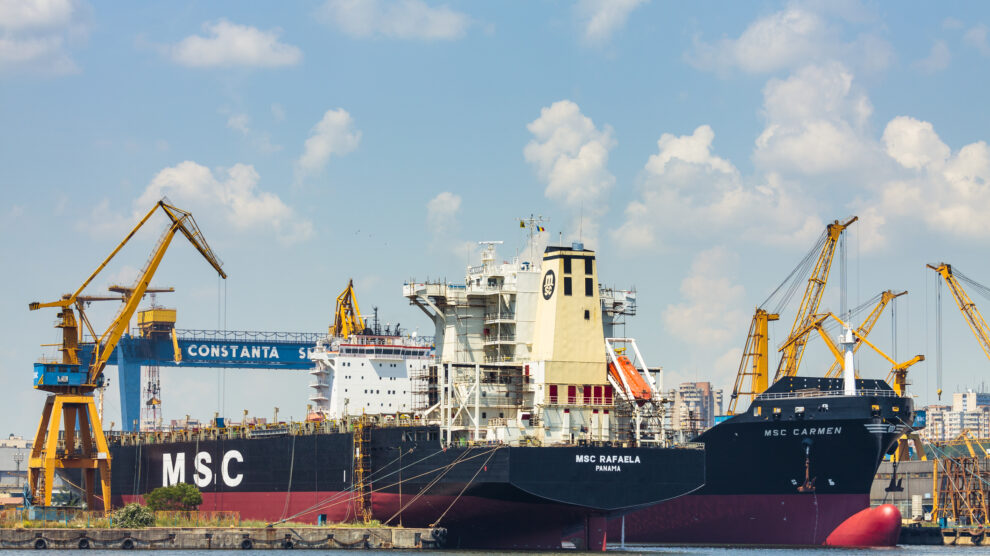
The Three Seas framework connects to the Middle Corridor, the transcontinental route from China through Central Asia, the Caspian, Georgia and into the European market. As Russian transit became geopolitically, legally and commercially untenable, the Middle Corridor gained strategic weight. Romania’s port of Constanța, already the largest Black Sea port and the principal maritime outlet for Ukrainian grain during the first years of the war, will increasingly be the point at which Asian cargo enters a European distribution network reaffirming the centrality of the Danube to European connectivity. The Vertical Corridor linking the Baltic to the Adriatic through a Southern route, and the Danube Strategy covering the river’s ten riparian and border states as a logistics and energy artery, add further layers to a connectivity architecture that, if and when fully realised, would give the region the physical infrastructure of genuine centrality.
China’s engagement through the China-CEEC framework, successor to the 17+1 mechanism, identified the region’s infrastructure gap and strategic position before most Western European capitals did. The practical results have been uneven and the political complications are real. CEE governments that disengage selectively while maintaining access to alternative capital sources are exercising prudence. The underlying geographic logic that Beijing identified does not disappear because the political relationship has become more complicated.
Demographic vulnerabilities
No credible account of CEE’s trajectory avoids the demographic problem. The United Nations projects nine of the ten fastest-shrinking countries in the world are in Eastern Europe. The IMF has warned the region risks growing old before it grows rich, with working-age populations in some countries projected to contract by up to a quarter by 2050. Two decades of emigration removed precisely the young, educated workers that a convergence economy requires. EU membership made that movement possible; millions exercised the right rationally. In a Western environment that still uses the language of decolonization, stripping countries of irreplaceable cognitive and labour resources remains the last acceptable form of peripheral resource extraction.
The response cannot be purely fiscal. Competing on wages with Western European labour markets in the near term is a losing proposition. The more durable argument is one of agency: the proposition that building something in Bucharest, Tallinn or Warsaw carries a meaning that a better-compensated position elsewhere cannot replicate. The Estonian digital state, the Polish defence-industrial revival, the Romanian cybersecurity ecosystems were built by people who chose to build, not merely to earn. Retaining and attracting talent requires making that proposition credible through competitive tax treatment for returning nationals, research infrastructure of genuine quality, and succession frameworks that give the next generation of entrepreneurs a reason to stay rather than exit.
The broader demographic response requires selective and productively managed immigration, productivity investment that allows a smaller workforce to sustain higher output, and the reconstruction-era labour pull from Ukraine that is already reversing some emigration flows. None of these is sufficient alone. Call it a CEE dream if you must, to compare with the American and Chinese dream, to which the aforementioned security is a necessary but not sufficient component.
The middle-income trap
The structural risk in the CEE success story is the middle-income trap. Countries that fail to cross from middle-income to true developed and high-income status are typically not those that grew too slowly. They are those that grew on cheap labour and foreign capital without building the domestic innovation capacity, institutional quality and capital depth to sustain growth as wages rise and cost advantages erode. CEE wages are rising, which is necessary. The risk is that they rise faster than productivity, and that foreign investment attracted by cost relocates before the region has developed domestic champions capable of holding its economic position.
The banking architecture works against the region. CEE financial systems are dominated by Western European parent institutions whose local subsidiaries apply standardised risk models that systematically undervalue long-horizon, knowledge-intensive businesses. Regional development banks with mandates to finance reinvestment rather than repatriation, combined with credit guarantee schemes for family- and entrepreneur-owned firms investing in R&D, address a gap that EU grant funding cannot close: grants, unlike credit, do not build the financial discipline that durable firms require. Patient capital is the missing instrument. The region must also redirect its own growing savings, through pension fund frameworks, sovereign wealth mechanisms and diaspora co-investment vehicles, toward domestic equity rather than external placement.
No pain, no gain
Western analyses of the CEE’s modernisation record consistently underweighs one of its most consequential features: the region’s tolerance for economic hardship. The fiscal shock therapy of the 1990s dismantled entire industrial sectors, eliminated savings and drove mass emigration. CEE populations absorbed these adjustments without the extended political crises that comparable programmes generated in Southern Europe a decade later. The result was fiscal institutions that are, in aggregate, more disciplined than those of the eurozone’s core, and an entrepreneurial culture shaped by scarcity rather than by access to cheap credit and institutional cushioning.
This capacity for adjustment, coupled with low public and private indebtedness, is a structural asset in a period when the demands on European economies, for defence reinvestment, green transition and technology coo-petition with Asia, are large and sustained. The CEE political economy has demonstrated that it can absorb these demands without social rupture on the Western European scale. That is not a minor advantage.
Export diversification
Western Europe will remain the primary partner. Thirty years of supply chain, regulatory and institutional integration are not restructured in a decade and should not be. But an exclusive orientation toward Western European markets is increasingly a vulnerability. The structural weaknesses of that primary partner, demographic contraction, energy transition costs, political fragmentation and industrial decline in core sectors, are not temporary. CEE’s exposure to them will deepen as the region’s economic integration with the West grows.
The diversification case is practical, not just strategic. Latin America offers cultural affinity and growing middle-class markets receptive to the specialist, quality-at-competitive-price proposition that CEE manufacturers can credibly make. Southeast Asia remains largely unmapped territory for CEE business. East and West African markets represent a longer horizon but a real one as infrastructure investment generates new demand. The Gulf states are significant capital sources with strong appetite for the reconstruction economy. CEE’s hidden champions are finding their way to some of these markets already. What is absent is the institutional scaffolding, trade promotion infrastructure, export finance, commercially oriented diplomatic networks, bilateral investment frameworks, that German or French exporters take for granted. Building that scaffolding is among the highest-return investments CEE governments can make.
A practical Single Market
The European single market is persistently incomplete in services, professional qualifications, digital commerce and the regulatory micro-environments where friction between member states imposes real costs. CEE has the institutional history and regulatory proximity to build denser internal integration than the general EU framework has achieved at continental scale. Common frameworks for business registration and cross-border investment would reduce the size disadvantage every individual CEE country faces when competing with larger Western economies. A Polish fintech expanding into Romania, a Romanian cybersecurity firm opening in Prague, an Estonian digital services company scaling into Bulgaria: these are the natural growth paths, and unnecessary regulatory and cultural friction between them is a direct tax on the region’s economic dynamism.
The instrument is enhanced cooperation within existing EU structures, not parallel institutions. The argument is that the region’s natural complementarities should be treated as explicit industrial policy rather than incidental geography. CEE cannot afford to compete individually for the same investors and the same export markets with the same tools and no coordination.
A common voice in Brussels
Internal integration only goes so far if it stops at the external border of the region. The same fragmentation that weakens CEE’s commercial position weakens its position in Brussels, where the region negotiates as a dozen separate delegations rather than as a bloc with shared structural interests. Western European member states, and the Franco-German axis in particular, have shown no such restraint in coordinating ahead of Council meetings. CEE’s habit of arriving at the table individually, on issues where its interests are largely aligned, has cost it influence disproportionate to its combined economic and demographic weight.
Energy policy is the clearest case. Decisions taken in Brussels and in the capitals that drive them, the early and largely unhedged exit from nuclear, the bet on Russian pipeline gas as a transition fuel, the assumption that decarbonisation timelines could be set without reference to baseload security, produced a Western European energy system that proved unable to absorb the shock of 2022. The result was the highest energy prices in the developed world, industrial demand destruction in Germany itself, and a structural cost disadvantage against the United States and China that European industry is still absorbing. CEE did not design that policy and did not benefit from the assumptions behind it, but it paid the price of it through the same gas and electricity markets.
The region’s own instincts ran the other way and have aged considerably better. Poland never abandoned coal as a baseload bridge and is now building its first nuclear plants with American and Korean partners. Romania kept Cernavodă running and is adding two new units, alongside small modular reactor plans that move faster than most Western European equivalents. Hungary, Slovakia, Bulgaria and Czechia all sit on operating nuclear fleets that Berlin spent the 2010s and 2020s deciding to forgo. The region also moved early on diversified gas supply, Romania’s Neptun Deep offshore field and the Vertical Gas Corridor among them, where Western capitals were still treating Russian supply as a settled commercial question rather than a strategic vulnerability. None of this was clairvoyance. It was the same instinct that drove CEE’s early reading of the Russian security threat: a structural unwillingness to substitute ideology for security of supply, born of having no margin for that kind of error.
The lesson is not that CEE was right and Western Europe was wrong, though on the substance it largely was. The lesson is that CEE has a demonstrated comparative advantage in practical energy policy and has so far failed to convert that advantage into Brussels influence. A coordinated CEE bloc, voting and negotiating together on energy security, on the pace and sequencing of decarbonisation, and on the broader pattern of EU economic policy drifting toward regulatory ambition unmoored from industrial reality, would carry real weight in the Council. The region has the empirical record. What it lacks is the habit of using it collectively rather than presenting it country by country to an audience that has shown limited interest in listening.
The agenda
The CEE Dream is an agenda, not a sentiment. It requires defence investment structured as industrial policy, not procurement consumption. It requires demographic policy centred on the conditions that make talent choose to build at home. It requires capital frameworks that direct the region’s own savings toward the long-term investment that the next generation of champions needs. It requires physical infrastructure, from the Three Seas to the Middle Corridor to the Danube, that allows the region to function as a single economic space. It requires export diversification toward Latin America, Africa and Southeast Asia alongside, not instead of, the Western orientation. It requires internal integration that gives every CEE firm the effective market scale that its individual national home cannot provide. And it requires the region to negotiate in Brussels as the coordinated bloc its shared interests already justify.
The geography is there. The entrepreneurial base is there. The institutional discipline, earned through thirty years of hard adjustment, is there. The centre of European economic weight expressed as long-term growth potential moves Eastward. Whether the region is positioned to convert that shift into lasting structural advantage depends on whether the agenda described above is pursued deliberately or left to the momentum of favourable circumstances that will not remain indefinitely favourable.
Photo: Dreamstime.