
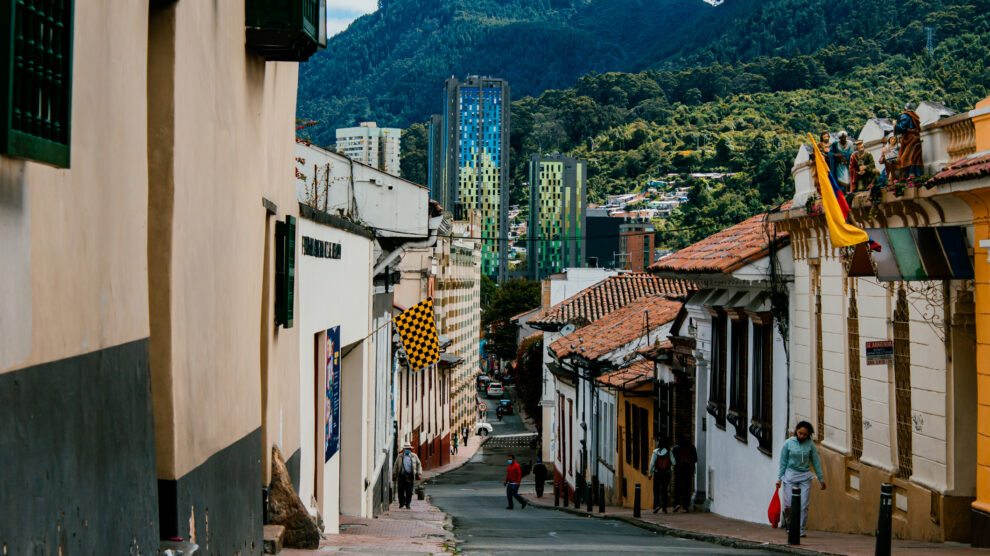

The Last Word: Bogotá shows that urban resilience works only when housing, transport, water, and public spaces are redesigned together.
Last week, I argued that the smartest city begins with shade. The point was not that trees are a substitute for technology, nor that every urban problem can be solved with a well-placed canopy. It was that intelligence becomes meaningful only when it reaches the pavement: when an older person can walk safely, a child can sit outside and a bus offers relief from punishing heat.
Bogotá offers the next chapter. The Colombian capital is not treating heat, water, housing, transport, and public space as separate departmental files. It is trying to redesign them as one civic system. That sounds obvious. In city government, where budgets, agencies and political credit are usually divided into tidy boxes, it is quietly radical.
Start with the home. In 2025, 61 per cent of Bogotá’s newly licensed residential development was registered under a sustainable-building certification system. Under the EDGE standard alone, the city has developed 110,000 homes; more than three quarters are social housing. The significance is not the certificate on the brochure. It is the attempt to make lower energy and water use normal for families who cannot pay a premium for virtue.
Bogotá is also looking backwards as well as forwards. Its CASA Mejoramientos approach upgrades existing homes with efficient taps and toilets, LED lighting, natural ventilation, better materials and guidance for residents. This is less glamorous than a new eco-district, but often more useful. Demolition produces carbon, expense and displacement; a repaired bathroom can improve daily life by Tuesday.
The same logic shapes mobility. Bogotá has nearly 1,500 zero-emission buses in operation and more than 630 kilometres of cycle lanes, with further buses planned. But the larger reinvention is not simply a cleaner fleet. The city is trying to ensure that affordable housing is not built in isolation, far from jobs, services and reliable transport. A resource-efficient home can still leave a family worse off if reaching work requires a long, costly and exhausting commute.
Then there is Bosa, one of Bogotá’s poorest and most polluted districts. Here, the city’s clean-air-zone programme is not beginning with fashionable central boulevards. It is repaving dusty roads, rerouting lorries, planting trees and creating parks around communities that have borne the worst health burden. Shade, in this version, is not an amenity. It is environmental justice with roots.
The whole of the city
Water adds urgency. In 2024, Bogotá’s main reservoir system fell to 19 per cent capacity and rolling restrictions followed. The city has since designed a rainwater-harvesting proposal for lower- and middle-income homes, although it is still seeking climate-risk funding. This distinction matters. A future-ready city should be judged not only by the clarity of its plans but by how many survive financing, procurement, maintenance, and the next election.
Bogotá has not solved the urban future. Some measures are operating, others are pilots, and some remain proposals. Actual savings from green buildings need better measurement. Electric buses still share a city with congestion and inequality. Green infrastructure requires patient maintenance, not a triumphant launch video. This is precisely why the story is useful: reinvention is not the absence of friction; it is the discipline of joining problems that bureaucracy prefers to separate.
Last week’s column asked what technology is for. Bogotá provides one answer. It is for seeing the city as a whole: the home that consumes water, the street that absorbs rain, the tree that lowers exposure, the bus that widens access and the neighbourhood that should not have to become wealthy before it becomes healthy. No single intervention is especially futuristic. Together, they change what the city is capable of.
The lesson is larger than Bogotá, and warmer than last week’s heat map. Cities do not become intelligent by collecting more data about worsening conditions. They become intelligent by using what they know to redesign ordinary life before those conditions become intolerable. Shade may be where urban intelligence begins. Bogotá shows where it must go next: into homes, buses, drains, budgets and the stubborn machinery of delivery.
Photo: Dreamstime.