

The Last Word: Technology will force us to make it clear where perfection genuinely creates value and where it simply removes uniqueness.
When I travel, I often want to bring something back that actually belongs to the place I have visited. Not necessarily something expensive or important, just something that could not have been bought anywhere else: a piece of pottery, something made from leather, perhaps a small object whose value comes partly from the fact that somebody there made it.
Very often, those objects are not perfect. The glaze is uneven, the stitching varies, the shape is not entirely symmetrical. In a factory, those differences would probably be treated as defects. Yet somehow they are often exactly what makes the object worth keeping.
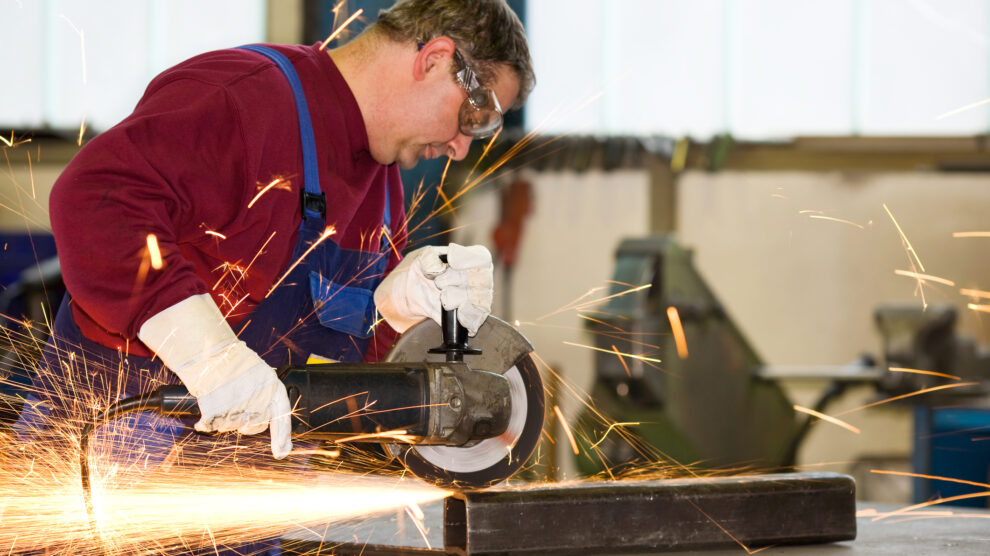
I was thinking about this again after reading a Guardian piece earlier this week about younger people turning towards traditional crafts such as bookbinding, metalwork and boatbuilding. Part of the attraction is practical: these kinds of jobs, for now at least, seem harder for artificial intelligence to replace. The article reported strong demand for apprenticeships, including more than 160 applications for two places at one London metalworking business.
But I am not sure the most interesting part is whether craftsmanship is somehow protected from AI. That sounds a little too neat. Machines will improve, robotics will improve, and the boundary between what can and cannot be automated will keep moving. What interests me more is why something made by hand can feel more valuable even when it is not technically better.
We have spent a very long time learning to eliminate variation. Industrial progress depended on it. If you could make the thousandth object identical to the first, you had quality, scale and efficiency. Management absorbed much the same logic: standardise processes, reduce errors, remove friction and make outcomes more predictable.
Much of that is obviously good. I would rather the components of an aircraft were manufactured to precise specifications than given the personal flourish of whoever happened to be working that shift. But perhaps we became so accustomed to equating consistency with quality that we started applying the same idea to things where consistency was never the whole point.
AI makes that question harder to ignore. It can already polish a sentence, correct an image, improve a presentation and produce another version within seconds. The output is often impressively competent, and it will get better. We are moving towards a world in which producing something polished may become remarkably easy.
So what happens to the value of the unpolished? I do not mean that we should suddenly celebrate poor work. There is nothing admirable about a badly made chair simply because somebody made it by hand. Craftsmanship is almost the opposite: it requires skill, judgement, patience and attention. Yet it also leaves room for variation, and perhaps that variation is telling us something.
The object is this object, someone made it, somewhere, at a particular moment. Another one might be slightly different. What mass production once regarded as inconsistency can, in another context, become provenance.
What not to automate
There is an interesting question for leaders here because organisations are now being encouraged to automate almost everything that can be automated. Much of that will make complete sense. Keeping people occupied with repetitive work when a machine can do it faster and more accurately is hardly a noble defence of humanity. But future readiness cannot only be about knowing what to automate. It may increasingly depend on knowing what not to automate, even when technically we can.
Do we really want every customer interaction to sound identical? Should every employee conversation arrive perfectly scripted? Does a hotel become better when nothing unexpected ever happens, or a city more interesting when its high street looks exactly like one several thousand kilometres away?
Leadership may face the same problem. If every message is perfectly polished, carefully balanced and algorithmically improved, we may eventually struggle to tell who is speaking. A hesitation, an unusual choice of words or even a slightly imperfect sentence can carry information too: there is a person here.
So I would be cautious about declaring craftsmanship the winner in some new battle between humans and machines. That feels too easy, and probably wrong. The more interesting possibility is that technology will force us to become much clearer about where perfection genuinely creates value and where it simply removes uniqueness.
Perhaps that slightly uneven object we bring home from a journey has understood something before the rest of us. It is not valuable despite being imperfect. Its imperfection is part of the evidence that it could only have come from that place, from those hands, in that particular way. In a world increasingly capable of producing perfect things, that may matter more than we think.
Photo: Dreamstime.