
The Last Word: A brand does not need to become a therapist, a guru or a life coach. In fact, brands should resist the temptation to do so.
Somewhere between a running app reminding you to stretch, a language app nudging you back to a half-finished lesson, and a music platform telling you what your year sounded like, consumers quietly changed. They stopped being an audience waiting to be persuaded, and became a work in progress.
That is why Dentsu’s new Consumer Vision study, Mothers of Reinvention, feels more useful than the usual marketing weather report. Based on 30,000 consumers in 25 markets, it says 87 per cent of consumers believe brands that help them grow will be the most memorable. The line that matters is not “memorable”. It is “grow”.
For decades, brands were trained to sell to a stable person: the commuter, the parent, the frequent flyer, the young professional, the luxury buyer. Segment, target, convert, repeat. It was tidy, measurable and, for a while, effective. But people no longer feel fixed enough to fit the spreadsheet. Careers are splintering, cities are shifting, families are being reassembled, health is being monitored, identities are being tested in public and private at once. The consumer is not a demographic. The consumer is a draft.
Most brands will misunderstand this. They will mistake reinvention for another campaign platform. They will add a purpose film, a few creator partnerships, some intimate-sounding push notifications and a points scheme wearing nicer shoes. They will ask AI to mimic care, write warmer emails and pretend that ‘Hi Andrew’ counts as a relationship. It does not. Shallow personalisation is still shallow. Performative purpose is still performance. A loyalty programme is not loyalty if all it proves is that the customer can do arithmetic.
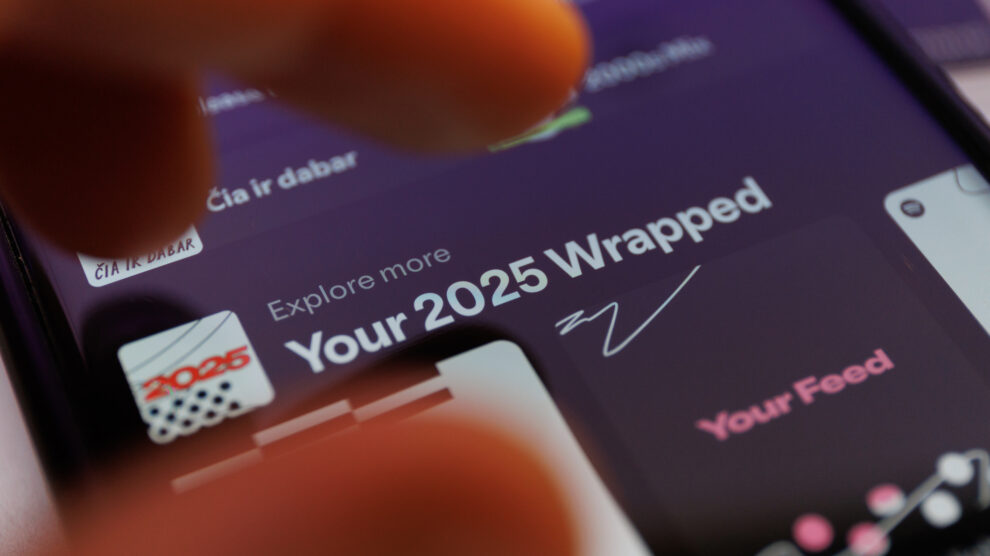
The better examples point elsewhere. Nike Run Club is interesting not because it sells shoes, but because it helps a person become someone who runs and sustains health. Duolingo is not simply selling lessons; with personalised practice and AI-powered roleplay, it gives the learner small rehearsals for a more capable self. Spotify Wrapped works because it turns data into identity: this is what you listened to, but also, slyly, this is who you have been. None is perfect. All are commercial. But each understands that relevance deepens when the product becomes part of someone’s becoming.
Raising the stakes
AI raises the stakes. At its best, it can make personalisation more democratic: a coach, tutor, organiser or creative partner in the pocket rather than a privilege reserved for those who can hire help. It can shorten the distance between curiosity and competence. It can help people learn, compare, practise, decide and recover faster. That is a meaningful form of progress.
But the same tools can also produce an industrial quantity of false intimacy. The danger is not that brands will know too little about us. It is that they will know a great deal and understand almost nothing. Data can detect behaviour. It cannot automatically grasp longing, shame, ambition, fatigue or the small private courage involved in trying to change. A brand that wants to matter in this landscape needs restraint as much as cleverness. It must learn when to guide, when to get out of the way and when not to insert itself into the story at all.
This is not only a marketing argument. It is a democratic one. People everywhere are being asked to reinvent: by technology, climate, migration, ageing, instability and work that keeps changing shape. The brands, institutions and places that remain relevant will be those that reduce friction on that journey. They will make knowledge easier to access, confidence easier to build and better choices easier to act upon. They will not shout louder for attention. They will earn attention by expanding agency.
This is where the test of relevance becomes sharper. A brand does not need to become a therapist, a guru or a life coach with a checkout button. In fact, it should resist the temptation. The task is more modest, and more demanding: to remove friction, build capability and make progress feel possible.
So the question for any organisation is simple, and rather uncomfortable. After someone spends time with you, are they merely more likely to buy, or are they better equipped to act, learn, choose and change? Attention is rented; relevance is earned when a brand helps people move forward.
Photo: Dreamstime.