
The Last Word: Heat turns assumptions into evidence. The firms that wait for normal to return are confusing relief with genuine readiness.
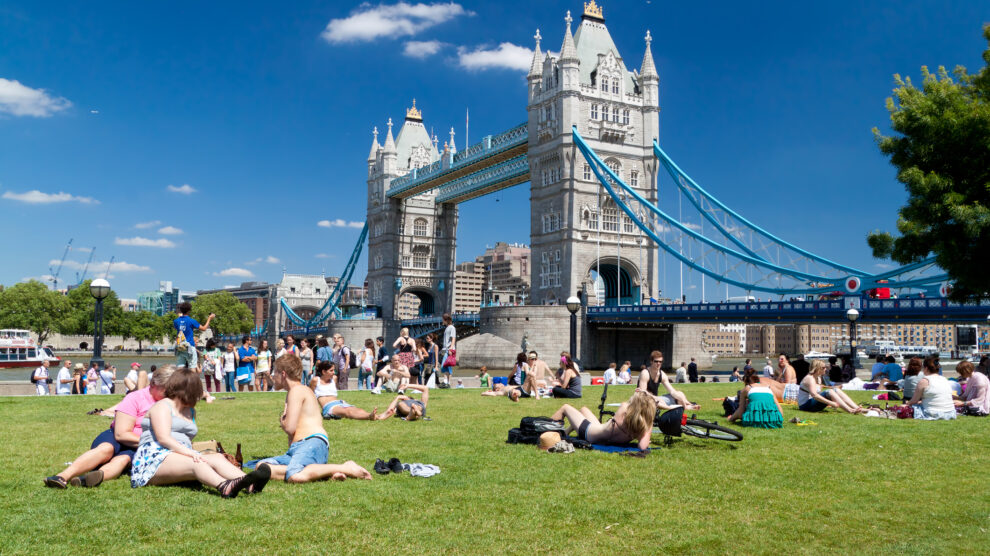
I am writing this from London, which is doing what London often does in a crisis: pretending, with admirable understatement, that things are broadly fine. They are not. The air is heavy, the pavements radiate heat, and the city’s older buildings seem to have been designed on the assumption that summer would remain a pleasant rumour.
Still, there is consolation in comparison. I could be in Paris, where temperatures reached 40.9°C this week and the elegant promise of boulevards, stone facades and café terraces met the less forgiving reality of physics.
That is the first management lesson of heat: it turns assumptions into evidence. A cool-climate city can get away for years with offices that trap warmth, schools without proper cooling, hospitals already running hot, railways designed for milder extremes and working patterns built around stable conditions. Then the thermometer rises and the fiction collapses. What looked like infrastructure becomes vulnerability. What looked like efficiency becomes fragility. What looked like a normal operating model becomes a catalogue of deferred decisions.
This is why a heatwave is not a weather event for the board to notice. It is a business-continuity rehearsal. Across Europe this week, schools have closed or adjusted timetables, hospitals and ambulance services have faced pressure, transport networks have struggled and public events have been cancelled. In London and Paris, even the home has become part of the problem, with buildings designed to retain warmth in winter now trapping heat in summer. The point is that the weather is now discussing the organisation.
We keep making the same mistake with disruption. We treat it as an interruption, not an operating condition. Climate risk, pandemics, cyber attacks, supply-chain shocks, geopolitical fractures and AI all arrive with different accents but the same message: the old assumptions have expired. Yet too many organisations respond with the theatre of readiness. A taskforce is formed, a dashboard appears, a memo circulates, and the language of resilience is sprinkled over systems that have not actually changed.
The heat will pass, the problem will not
That is not reinvention. Reinvention is not the slide deck after the crisis; it is the redesign before the next one. It asks whether the working day still makes sense when heat is dangerous by noon. It asks whether a hospital estate, a school timetable, a logistics route, a warehouse, a data centre or a commuter network has been built for the world that is arriving, not the one it once served. It asks whether resilience has a budget, an owner and consequences, or whether it remains a handsome word in a sustainability report.
The uncomfortable truth is that adaptation is now a test of leadership seriousness. It is easy to announce ambition. It is harder to pay for shade, ventilation, retrofitting, flexible shifts, safer outdoor work and supply chains that can withstand heat, flood or drought. It is also harder to admit that these costs are not optional extras but the price of remaining useful. Heat exposes inequality with brutal precision: those with air conditioning call it inconvenience; those without it experience risk, illness or lost income. A strategy that ignores that division is not future-ready; it is merely comfortable.
Cities should be especially wary of their own confidence. London and Paris are not just places on a map; they are operating systems for national economies, public services and social trust. When they overheat, the consequences move quickly from discomfort to disruption. The same is true of companies. Leaders can talk endlessly about agility while assuming that staff will cope, customers will forgive, lorries will arrive, servers will run and public patience will stretch. These are not assumptions. They are risks wearing ordinary clothes.
The heat will pass, but that is not the same as the problem passing. Leaders who wait for normal to return are confusing relief with readiness. The future-ready organisation will not be the one with the most elegant climate statement, but the one that has redesigned its ordinary life for extraordinary conditions. Reinvention begins when we stop asking how to survive the next disruption and start asking what must be rebuilt because disruption is now the climate in which we operate. The future will not be air-conditioned by good intentions.
Photo: Dreamstime.