Ukraine and Moldova have opened the first of six EU accession clusters. The euphoria is understandable, but the road to Brussels is long.
On June 11, Marta Kos, the European Union’s commissioner for enlargement, stood in her Brussels office before a whiteboard studded with coloured magnetic buttons. Each tracked a candidate country’s progress across the 33 chapters of reform that membership demands, grouped into six clusters: green for a chapter closed, yellow for one under negotiation, red where no talks had begun. Kos, a former Slovenian diplomat whose own country joined in 2004, told the Irish Times that Ukraine was rewriting its statute book while “the bombs are falling”. Her board held a great deal of red.
The next day ambassadors from the 27 member states endorsed a common negotiating position in Brussels, and Ursula von der Leyen and António Costa announced in a joint statement that the bloc would open the first cluster, on fundamentals, at conferences in Luxembourg three days later. Volodymyr Zelensky called the decision a strong step for Europe; Maia Sandu, who has staked her presidency on the European path, welcomed a signal of unity. For Kyiv and Chișinău, granted candidate status only in 2022, it was the moment they had awaited. The cluster covers the rule of law, democratic institutions and the functioning of the state.
No favours
The EU granted both countries candidate status in 2022, agreed to open talks in December 2023 and formally launched negotiations in June 2024, only for the process to stall over Hungarian objections. Kos set out the arithmetic in the same interview. Every remaining step needs all 27 governments to agree, and she warned that, were Ukraine made to wait as long as North Macedonia has, formal talks would begin no sooner than 2045. Kaja Kallas, the bloc’s foreign-policy chief, had put it plainly in November, telling reporters there were “no shortcuts” for aspiring countries.
Péter Magyar, who took over from Viktor Orbán as Hungary’s prime minister earlier this year, dropped Budapest’s veto in April, and only after Kyiv signed an action plan protecting its Hungarian minority. Even that came with a limit. Magyar said Hungary would not support a fast-track entry, and Zelensky’s wish to join by 2027 went nowhere.
Ukraine is an awkward case. With 35 million people and Europe’s largest area of farmland, it would join as the bloc’s poorest member and its biggest farmer, straining both the budget and the Common Agricultural Policy. There are ways to soften that. Poland’s farmers were folded into the subsidy system over 20 years, and reached full payments only in 2024. Kos keeps the example close.
In a December paper, Engjellushe Morina of the European Council on Foreign Relations urged Brussels to stop using gradual integration as a substitute for the real thing and push the front-runners over the line. Her team interviewed officials in all nine candidate countries. Their verdict: Ukraine and Moldova could finish their chapters by 2028, but the harder resistance now comes from within the club. France can demand a referendum on any new member. In several states, fewer than half of voters want one at all.
Maia Sandu won a second term in 2024 by less than a single percentage point, on a straight promise of Europe. In April she told reporters her government would deliver on justice and the courts. Nearly a third of Moldovans were poor last year. Prosecutors are still untangling the network of Ilan Shor, a fugitive tycoon convicted of fraud, who allegedly paid people to vote against Europe in 2024.
Zelensky now has the pledge he can carry into any peace talks. Sandu has the date she gave her voters, 2030. Today, in Luxembourg, Kos opens the first of six clusters. It covers the rule of law, and nothing else.
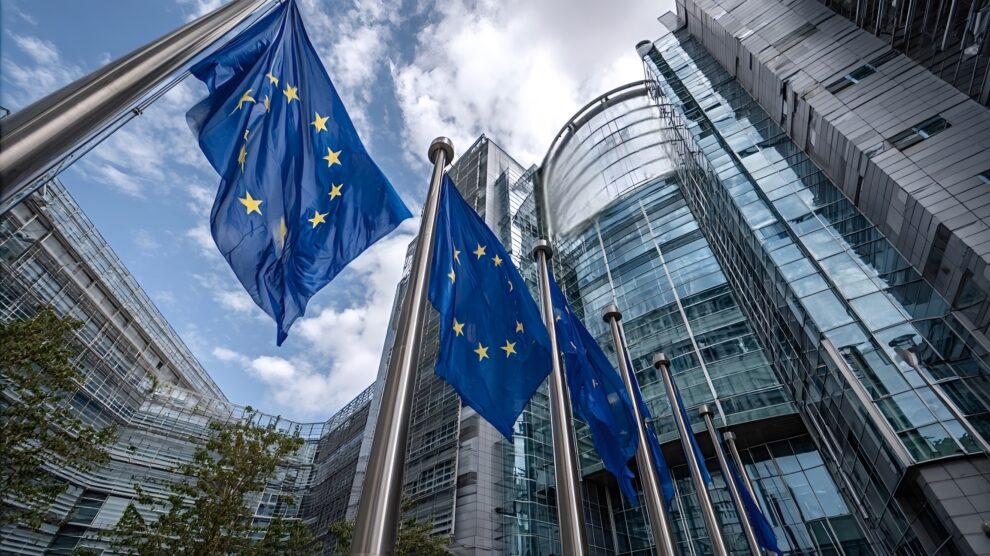
Photo: Dreamstime.