The case for institutionalising long-term thinking in government is growing, but the results of experiments carried out so far are mixed.
The Welsh government’s Future Generations Commissioner publishes an annual report, and the 2025 edition runs to 147 pages. It covers climate targets, biodiversity loss, health spending structures, food security, health inequalities, the future of the Welsh language, cultural funding cuts, circular economy principles, fair wages in public procurement, the mental health of young people, and the structural biases of annual budget cycles. It also commissions original artwork.
Most government is organised to manage the present. Ministries have portfolios, budgets rarely run for more than a year. Elections come every four or five. Politicians who invest in things that pay off in 20 years, at a cost that bites in two, tend not to have careers long enough to claim the credit. The result is a structural tendency to underprice the future, to cut prevention budgets when money is tight, to approve the road bypass because the jobs are visible and the biodiversity loss is not, to treat the Welsh language as a nice-to-have rather than a cultural backbone worth defending.
The Welsh Commission was created in 2015 under the Well-being of Future Generations Act, which obliges 56 public bodies to consider the long-term impact of their decisions. The Commissioner’s role is to act as guardian of those not yet born, an ombudsman for posterity, if you like. It is, as the Welsh government notes with some satisfaction, a world first.
Wales is not alone in trying. The UAE appointed a Minister of State for Government Development and the Future in 2020, tasked with preparing the country for the next 50 years, a role that sits naturally in a system where decision-makers plan in decades rather than electoral cycles. Hungary introduced a commissioner for future generations in 2008. Israel had a Commission for Future Generations with an effective veto on legislation. But both are long gone. Hungary’s commissioner intervened in over 200 cases a year and its wings were quickly clipped. Israel’s body was abolished in 2016.
Survival by design
The Welsh model has survived a decade partly by design. The Commissioner advises and challenges but does not decide. She (or now he) can publish findings, name bodies that are underperforming, and occasionally stop a motorway, as happened in 2019. But there is no veto. Courts have been sceptical; one judge called the act that established the Commission “vague, general and aspirational”. The limits that make the office survivable also blunt its force.
What the Welsh report does demonstrate, in exhaustive detail, is just how badly the standard machinery of government handles anything time-sensitive. The NHS in Wales now absorbs 49 per cent of the Welsh Government’s budget, up from 34 per cent before devolution in 1999. Almost none of this goes to the interventions (such as early years programmes, mental health support, tackling poverty and obesity) that would reduce demand for that same NHS in a generation. Prevention is universally accepted as cheaper and better. It is also consistently deprioritised, because the savings accrue to a future budget cycle and the costs hit this one.
The same logic runs through every section of the Commission’s current report. Nature recovery funding is short-term and piecemeal. Cultural budgets are cut when fiscal pressure mounts, despite strong evidence linking arts participation to health outcomes. Food policy remains fragmented. Procurement rules designed to favour the cheapest bid sit in institutional tension with well-being objectives that require local sourcing or fair wages. Annual budget cycles, the Commissioner observes drily, are simply not suited to managing challenges that compound over decades.
Fixing this may require something more than a commissioner with a pulpit. It may require rewiring how public finance works, such as ring-fencing prevention spending, building long-term budget frameworks into law, making it legally awkward for governments to eat their seed corn. Several countries are experimenting with wellbeing budgets. New Zealand, Scotland and Iceland developed one together in 2019. Finland has a parliamentary Committee for the Future that reviews legislation through a long-term lens. None of these is dramatic. But they shift what gets measured, and what gets measured tends to get done.
Time for democracies to start thinking long-term
The harder problem is democracy itself. Long-term governance works most cleanly in systems where continuity is guaranteed, as in authoritarian states, constitutional monarchies with strong technocratic bureaucracies, and small city-states. The UAE can plan for 2071 because no election will interrupt the plan. Democracies can’t offer that, and probably shouldn’t want to. But the alternative, governing entirely within the electoral cycle, treating anything beyond the next manifesto as someone else’s problem, is its own kind of failure of representation. Future generations have no vote, but someone should probably speak for them.
The Welsh model, for all its limits, makes the case that such an institution can survive and accumulate influence. Derek Walker, the current Commissioner, fields around 800 requests for advice a year. Public bodies take the framework seriously, even where they don’t fully implement it. The Commission has changed the terms of debate in ways that are hard to quantify but real.
Posterity, as Edmund Burke put it, is a nation in partnership with the dead and the unborn. Most governments are pretty good at honouring the dead. The unborn tend to get the short end.
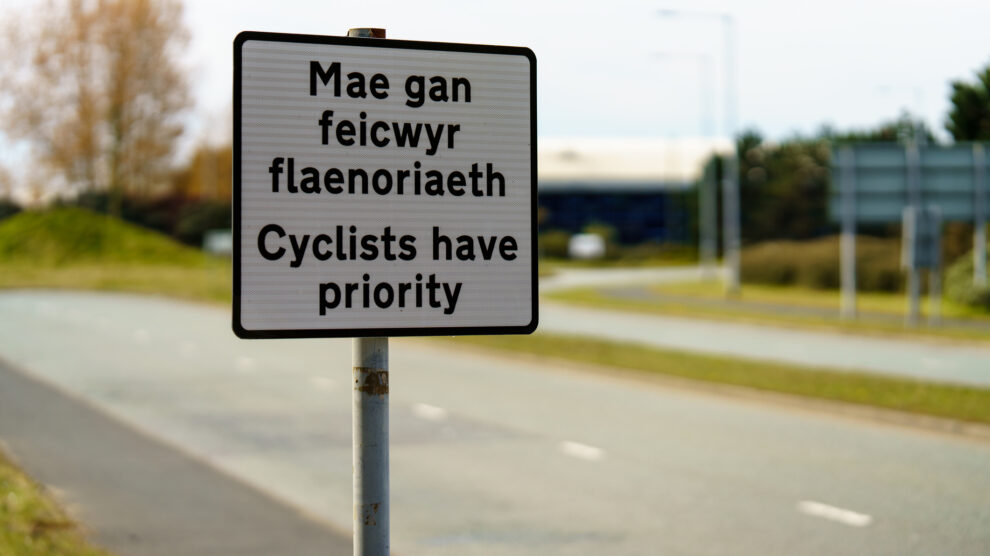
Photo: Dreamstime.